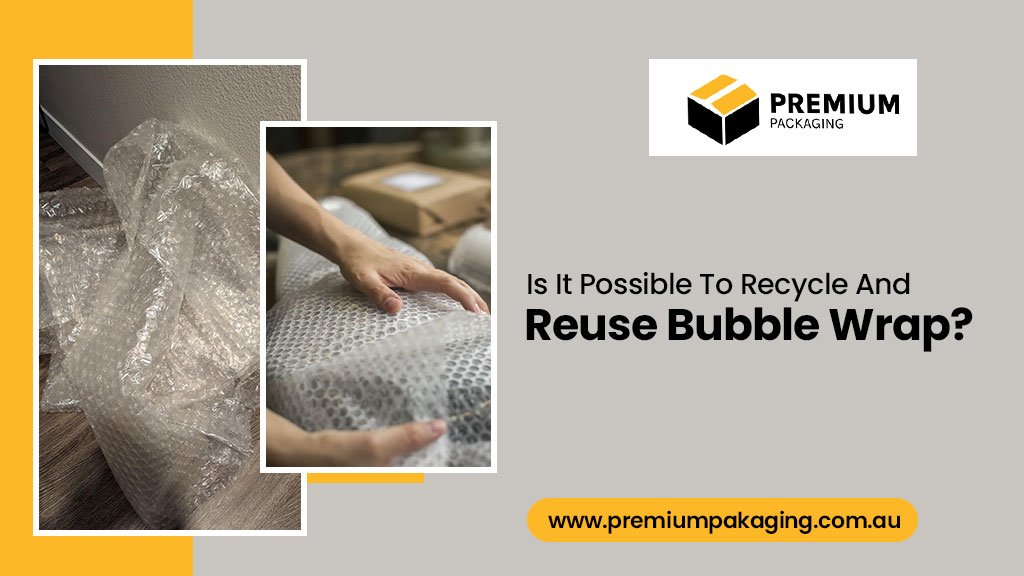
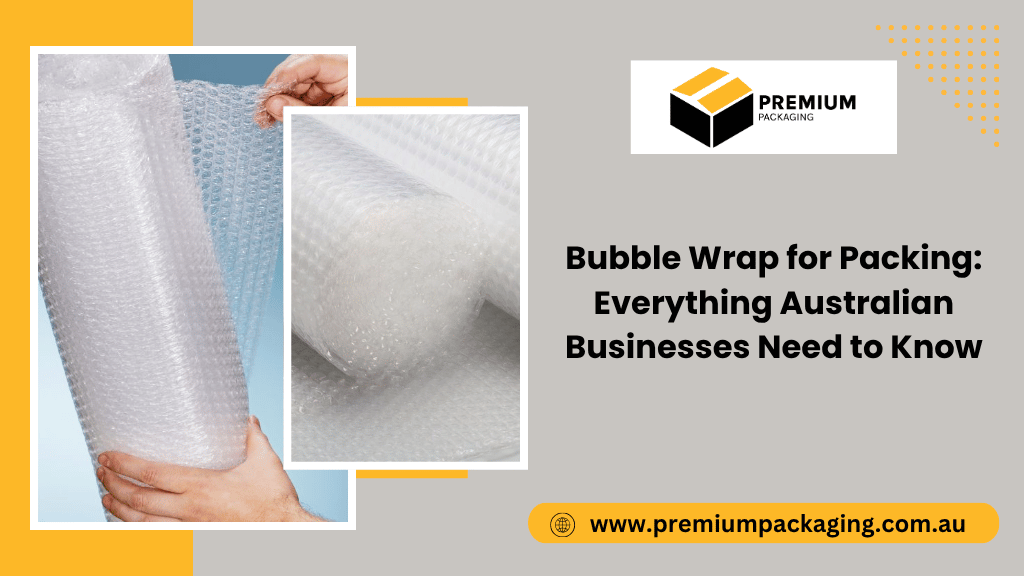
For Australian businesses moving fragile stock, bubble wrap is one of those packaging staples that quietly does a lot of heavy lifting. Whether it’s protecting electronics in a warehouse, cushioning glassware on a retail floor, or wrapping orders inside an eCommerce dispatch line, the rolls keep coming, and the offcuts keep piling up. That raises a fair question for any sustainability-conscious operations team. Can bubble wrap actually be recycled, and is it worth working harder to reuse bubble wrap before sending any of it on?
The short answer is yes on both counts, with some important conditions that affect how you handle it on site.
Can you recycle bubble wrap in Australia?
Bubble wrap is recyclable, but not through the kerbside or co-mingled commercial bin most businesses already use. It sits in the soft plastics category, which has its own dedicated collection stream. Standard council and commercial mixed-recycling sorting equipment isn’t built to process flexible films. When soft plastics enter that stream, they tangle conveyor belts, jam machinery, and contaminate clean cardboard or rigid plastic loads, often sending the whole bale to landfill.
Soft plastic recovery in Australia has shifted considerably over the past few years. Several state-backed and retailer-led programmes now accept clean bubble wrap and similar films at designated drop-off points, while a number of industrial waste providers offer dedicated soft-plastic collections for warehouses and distribution centres generating film at volume. The recovered material is reprocessed into outdoor furniture, bollards, fence posts, building products and, in some cases, new packaging film.
For a business to participate effectively, the bubble wrap needs to be:
- Clean and dry, with no food residue, oil or adhesives
- Free of paper labels, sticky tape clumps and shipping documents
- Loosely bagged or baled, not crammed into general waste
Once those conditions are met, a soft-plastics drop-off or contractor pickup is a straightforward way to increase your diversion rate without changing how the warehouse operates day-to-day.
Why reuse should come before recycling
Recycling is the safety net. Reuse is where the real environmental and operational savings sit. Every metre of bubble wrap that protects a second or third shipment delays the manufacturing of new film and trims your packaging spend at the same time.
There are several natural places to reuse bubble wrap inside a typical commercial workflow.
Inbound packaging recovery. When stock arrives wrapped, pull intact lengths off the cartons and stage them for reuse rather than tossing them. A simple reuse station next to the goods-in bay catches material that would otherwise be wasted within minutes.
Returns processing. Returns often arrive with perfectly usable bubble wrap inside. Reusable lengths can go straight back into outbound dispatch with no loss in protection.
Internal transfers. Bubble wrap doesn’t need to look pristine when moving stock between sites, storerooms, or shop floors. Mark a section of your warehouse for second-life film and let staff draw from it for these tasks.
Display and storage protection. Retailers and wholesalers can reduce offcuts and keep them on hand for wrapping fragile items, long-term storage, or window display rotations.
The trick is to reuse the path of least resistance. If second-life bubble wrap is hidden in a back corner while fresh rolls sit on every pack bench, staff will reach for the new roll every time. A short conversation about why reuse matters, plus visible storage near the dispatch line, usually shifts behaviour quickly.
When reuse stops making sense
Bubble wrap loses its protective qualities once the bubbles are crushed flat or the film is heavily punctured. Continuing to use compromised material on outbound orders is a false economy. Damage rates climb, customer complaints follow, and the cost of replacements and refunds will easily outweigh any savings on new packaging.
A practical rule of thumb is the touch test. If the film no longer pops back when squeezed, it’s done its job for outbound work. Spent material can still go toward internal cushioning, then move into the soft-plastics recycling stream rather than general waste.
Buying bubble wrap in bulk without the waste
For dispatch operations at any reasonable volume, buying bulk rolls of bubble wrap makes far more sense than repeatedly ordering small quantities. Larger rolls cut down changeovers at the pack bench, reduce inner cardboard core waste, and lower the per-metre cost of protection. They also tend to arrive on a single pallet rather than across multiple courier consignments, which lowers transport emissions.
A few procurement points worth weighing up when sourcing bulk bubble wrap:
- Bubble size suited to your products (small bubbles for surface protection, large bubbles for impact cushioning, anti-static rolls for electronics)
- Roll length and width matched to your most common carton dimensions to reduce offcut waste
- Storage planning so rolls aren’t crushed or left in direct sunlight before use
- A consistent supplier so the gauge and quality stay predictable across orders
Premium Packaging supplies bubble wrap in commercial-grade rolls and configurations built for warehouse, retail and 3PL throughput, alongside the broader range of wholesale packaging supplies that keep dispatch lines moving.
Sustainable alternatives worth considering
For businesses seeking to reduce dependence on soft plastics over time, paper-based protective options have come a long way. Honeycomb kraft wrap expands into a cushioning lattice that handles most fragile shipments, while corrugated dividers and moulded pulp inserts work well for bottles, ceramics and electronics. These materials drop into standard cardboard recycling streams, which simplifies end-of-line sorting for both your warehouse and the customer receiving the parcel.
The shift doesn’t need to be all-or-nothing. Many operations run paper-based protection on lighter, lower-risk lines and keep bubble wrap on higher-value or more delicate stock where its cushioning performance still wins out. Premium Packaging stocks both ends of that spectrum so businesses can transition at a pace that suits their product mix and budget cycle.
Frequently asked questions
Can I put bubble wrap in my commercial recycling bin?
No. Bubble wrap is a soft plastic and contaminates standard mixed-recycling loads. It needs to go through a dedicated soft-plastics drop-off or a commercial soft-plastic collection service.
How many times can you reuse bubble wrap before recycling it?
There’s no fixed number. Reuse it while the bubbles still pop back when squeezed and the film is intact. Once it’s crushed, torn or saturated, send it to soft-plastic recycling.
Is biodegradable bubble wrap available?
Genuinely compostable bubble wrap remains in limited commercial-scale supply. The most reliable sustainable alternatives at this stage are paper-based protective wraps, honeycomb kraft and recycled-content cardboard inserts.
Does Premium Packaging supply bubble wrap in bulk for businesses?
Yes. Bubble wrap is available in commercial-grade rolls suited to warehouse, retail and eCommerce dispatch operations, with a range of bubble sizes and roll lengths.
What’s the simplest way to reduce bubble wrap waste in a warehouse?
Set up a clearly marked reuse station near goods-in, train staff to draw reusable lengths from it before opening fresh rolls, and arrange a soft-plastics collection for genuinely spent material.
Closing the loop
Bubble wrap doesn’t have to be a single-use problem on a balance sheet. Treated as a working asset, it can protect goods through several shipments before being recovered through soft-plastic recycling. Pair that with smarter procurement and a steady move toward paper-based options where they fit, and the effect on both waste output and packaging spend becomes meaningful. Premium Packaging’s team can help match the right protective solution to your dispatch profile, whether that involves upgrading bubble wrap specifications, introducing paper alternatives, or rebuilding a pack bench around lower-waste workflows.