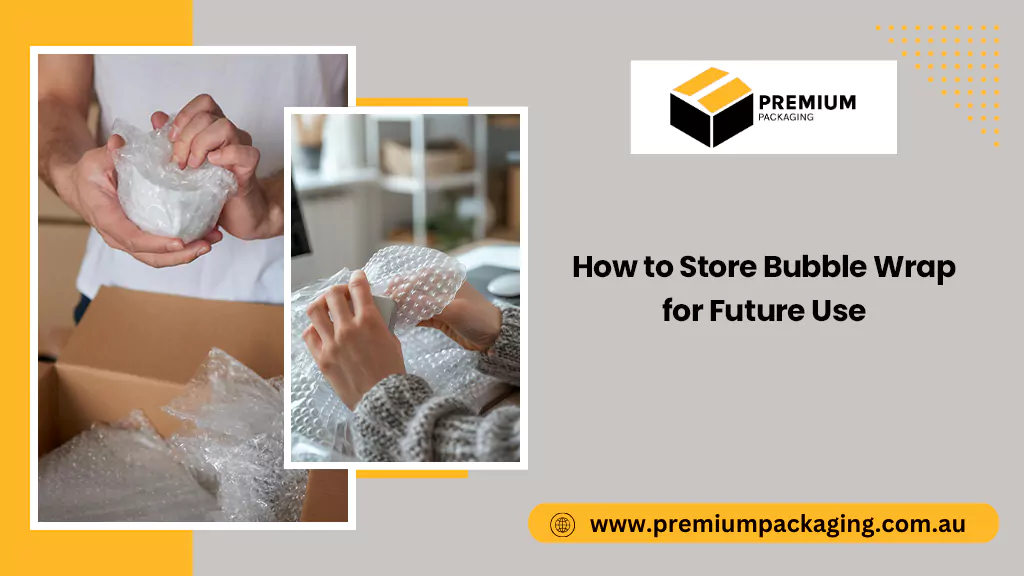
For any business that ships, packs, or stores goods on a regular basis, bubble wrap is one of the most relied-upon protective packaging materials. It cushions fragile items, fills voids in cartons, and protects surfaces from scratches and impacts throughout the entire transit journey. Buying it in bulk makes strong operational sense, particularly for eCommerce businesses, warehouses, logistics operators, and retailers who need consistent stock on hand at all times.
But bulk buying only delivers real value when the material is stored correctly. Bubble wrap that has been exposed to heat, crushed under weight, left in direct sunlight, or stored in damp conditions loses its cushioning ability before it ever reaches a product. Popped or deflated bubbles cannot protect goods. Compromised rolls slow down your packing team and increase the risk of product damage in transit.
At Premium Packaging, we supply bubble wrap and protective packaging materials to Australian businesses at commercial volumes. This guide covers everything your operations and procurement teams need to know about storing bubble wrap correctly so every roll performs exactly as it should, from the first sheet to the last.
Why Proper Bubble Wrap Storage Matters for Business Operations
In a commercial setting, packaging material management is part of operational efficiency. Poorly stored bubble wrap creates problems that extend well beyond a single damaged roll.
When bubble wrap is stored incorrectly, the air pockets that provide its cushioning begin to deflate. Once those pockets are compromised, the material offers little meaningful protection. A team member pulling a damaged roll from storage mid-pack either wastes time inspecting and discarding unusable sections or, worse, uses a compromised wrap, sending out goods that arrive damaged.
Damaged goods lead to replacement costs, return processing, customer service time, and, in some cases, reputational damage that is harder to recover from than the cost of the product itself.
Protecting your bubble wrap inventory is a small operational discipline that carries real commercial weight. The steps involved are straightforward and require no specialist equipment, just consistent habits applied across whoever manages your packaging room or warehouse.
Understanding What Damages Bubble Wrap in Storage
Before getting into the storage method itself, it is worth understanding the specific conditions that degrade bubble wrap quality. Knowing the causes makes the solutions far easier to apply consistently.
Heat and UV Exposure
Bubble wrap is manufactured from polyethylene film. Like most plastics, polyethylene is sensitive to prolonged heat and ultraviolet light. Exposure to direct sunlight or storage in areas that trap heat, such as unventilated storage sheds, loading docks with metal roofing, or areas near industrial heating equipment, causes the film to become brittle over time. Brittle film is prone to tearing during wrapping and provides reduced cushioning performance. The bubbles can also become more vulnerable to popping under lower pressure than a well-stored roll would tolerate.
For Australian businesses, this is a particularly relevant consideration. Summer temperatures in warehouses and storage areas can climb significantly, especially in Queensland, Western Australia, and South Australia. Any storage area that reaches extreme heat during the summer months is not suitable for long-term bubble wrap storage without temperature management.
Moisture and Humidity
Moisture weakens the adhesive bond between the two polyethylene film layers that form bubble wrap. Over time, a damp storage environment can cause delamination, in which the flat backing sheet separates from the bubble layer. Delaminated wrap is fragile, tears easily, and loses the structural integrity that keeps the air pockets sealed.
High humidity is a risk in warehouse areas with poor ventilation, near loading dock doors that are frequently open to the outdoors, or in storage rooms adjacent to refrigerated or cold storage areas where condensation can form. Keeping bubble wrap away from these zones is essential for maintaining quality across a bulk supply.
Compression and Physical Crushing
Bubble wrap stored loosely under heavy stock or equipment will have its air pockets compressed by the weight placed on top of it. Once bubbles are crushed flat, they do not return to their original form. The cushioning is permanently reduced in those sections, and using crushed wrap to protect fragile goods provides far less protection than the material was designed to deliver.
This is particularly relevant in compact warehouse environments where packaging supplies are stored alongside heavier inventory. Keeping bubble wrap in a dedicated, clearly marked space, with no heavy items stored on top of it, is both a quality and a safety measure.
Dust and Contaminants
Dust accumulation on bubble wrap is not just an aesthetic issue. For businesses packing goods that have smooth or polished surfaces, electronics, food-adjacent products, or items that will be presented in retail packaging, dust and grit on the wrap can cause surface scratching or contamination at the point of use. Keeping bulk rolls in a clean, covered storage area prevents this entirely.
How to Store Bubble Wrap Correctly: A Practical Business Guide
Choose the Right Storage Location
The storage area for your bubble wrap should be dry, well-ventilated, and away from direct sunlight. It should be in a part of the building that maintains a reasonably stable ambient temperature, without dramatic swings between hot and cold. A dedicated shelving section within a climate-managed warehouse area is the preferred setup for businesses using bubble wrap at volume.
Avoid storing bubble wrap in outdoor sheds, near loading dock doors, in rooftop storage areas, or anywhere that is subject to regular temperature extremes. In Australian conditions, this consideration carries more weight than it might in cooler climates.
Keep Rolls Upright or Horizontally on Clean Shelving
Bubble wrap rolls should be stored either standing upright on one end or laid horizontally on flat shelving. The important thing is that they are not leaning at an angle for extended periods, which can cause the roll to deform and the film to crease. Consistent creasing across a roll means that when your team unrolls it for use, the sections with deep creases will have compromised bubble integrity.
Flat shelving with enough depth to support the full diameter of the roll is ideal. If shelving is not available, wall-mounted brackets or a purpose-built roll dispenser rack keep rolls off the ground and out of the path of foot traffic and forklifts.
Use a Bubble Wrap Dispenser for Active Use Areas
In packing stations and dispatch areas where bubble wrap is used throughout the day, a dispenser is both a storage and an efficiency solution. A properly mounted dispenser keeps the roll at an accessible height, keeps the wrap clean and untangled, and allows team members to pull and cut efficiently without handling the full roll each time.
Premium Packaging supplies a range of dispensers designed for commercial use. For businesses running high-volume packing operations, a dispenser reduces material waste from tangled or contaminated wrap and speeds up individual packing time.
Store Unused Sections and Off-Cuts in Labelled Bins
In any active packing operation, off-cuts and partially used sheets of bubble wrap accumulate quickly. If these are left loose on workbenches or packing tables, they end up damaged, contaminated, or discarded before they can be reused. A simple, clean bin or clear storage container labelled for bubble wrap off-cuts keeps usable material available for smaller wrapping jobs and reduces waste across the operation.
Separating off-cuts by bubble size, particularly if you stock both small-bubble and large-bubble wrap, makes retrieval faster and reduces the chance of a team member reaching for the wrong specification during a busy dispatch period.
Protect Stored Rolls from Light and Dust
For bubble wrap that will be stored for an extended period before use, wrapping the rolls in a protective sleeve or storing them in large polythene bags keeps both dust and UV exposure at bay. This is particularly relevant for businesses that buy bubble wrap in large volumes and cycle through stock over several months.
Labelling stored rolls with the date of receipt and the bubble size helps with stock rotation. Using older stock first before drawing on newer inventory is a simple discipline that prevents material from sitting in storage long enough for quality degradation to become a concern.
Rotate Stock Consistently
First-in, first-out is the applicable stock rotation principle for bubble wrap, as it is for most packaging consumables. New deliveries should be placed behind or beneath existing stock so that the oldest material is drawn down first. This reduces the risk of older rolls sitting untouched while newer stock is used, and ensures that no roll remains in storage longer than necessary.
For businesses receiving large bulk deliveries, marking the delivery date on each pallet or roll bundle upon receipt is a straightforward way to make rotation visible and easy to manage.
Storing Different Types of Bubble Wrap
Premium Packaging supplies several types of bubble wrap for commercial use, and each has slightly different storage considerations worth noting.
Standard Bubble Wrap Rolls
The most widely used format across eCommerce, retail, and warehousing operations. Standard rolls should be kept in their original wrapping until put into use, stored horizontally or upright on shelving, and kept in a cool, dry area away from sunlight. Once in use at a packing station, a dispenser rack is the preferred setup.
Large Bubble Wrap
Large bubble wrap provides a bigger air cushion and is typically used for bulkier or heavier items that need void filling as well as impact protection. The larger bubble profile makes rolls slightly more vulnerable to compression under weight, so ensuring that nothing is stacked on top of large-bubble stock in storage is particularly important.
Anti-Static Bubble Wrap
Anti-static bubble wrap is used for electronics and components sensitive to electrostatic discharge. Storage conditions for anti-static wrap follow the same principles as standard wrap, but the material should be kept in its original sealed packaging for as long as possible before use. The anti-static treatment is applied to the film surface, and prolonged exposure to dust or contamination can reduce its effectiveness.
Perforated Bubble Wrap
Perforated wrap is pre-cut at regular intervals, allowing team members to separate sheets quickly without scissors or a cutting blade. For storage, keep perforated rolls covered, as the perforations allow dust to settle more easily into the roll than into a smooth-edged roll. A simple polythene sleeve over the roll in longer-term storage prevents this.
Making the Most of Your Bubble Wrap Investment
Businesses that buy bubble wrap at wholesale volumes are making a meaningful investment in their protective packaging supply. Protecting that investment through correct storage is a straightforward extension of the original procurement decision.
Beyond storage, there are a few operational habits that extend the working life of bubble wrap stock and reduce waste across the operation.
Inspect rolls at the point of use rather than at the point of storage. A quick visual check before pulling wrap confirms that the material is intact and the bubbles are inflated before it reaches a product.
Reuse bubble wrap where the material remains intact. A roll used once to wrap goods for an outbound shipment that arrives at the receiving end in good condition can be returned to the packing station for reuse. Intact bubbles provide the same protection on the second use as on the first.
Dispose of compromised material rather than allowing it to remain in circulation. A roll with popped bubbles or delaminated film should be removed from the packing station and set aside for recycling. Using damaged wrap increases the risk of product damage in transit and creates a false sense of protection for goods that are, in reality, inadequately wrapped.
Bubble Wrap Recycling for Australian Businesses
Bubble wrap is a soft plastic material and is not accepted in standard kerbside recycling bins across most Australian local government areas. However, soft plastic recycling drop-off points are available at several major supermarkets through REDcycle and similar programs.
For businesses generating significant volumes of bubble wrap waste, contacting a commercial soft plastics recycler to arrange collection or drop-off is the most responsible disposal route. Where possible, purchasing bubble wrap manufactured from recycled content or sourcing recyclable alternatives reduces the environmental footprint of your protective packaging supply.
Premium Packaging can advise on eco-friendly protective packaging alternatives, including paper-based cushioning products and biodegradable protective materials, for businesses looking to reduce plastic use without compromising product protection.
Source Your Bubble Wrap Supply Through Premium Packaging
Premium Packaging supplies bubble wrap and protective packaging materials to Australian businesses at commercial volumes, with delivery available across metro and regional areas Australia-wide. Our range includes standard bubble wrap rolls, large bubble wrap, anti-static bubble wrap, and perforated options suited to a range of packing applications.
Buying through a single wholesale supplier means consistent material quality across every order, reliable supply to keep your packing operations running without interruption, and access to a team that understands commercial packaging requirements.
Contact us at premiumpackaging.com.au to discuss your bubble wrap supply requirements, or to explore the full range of protective packaging products available for your business.
Frequently Asked Questions
How long can bubble wrap be stored before it loses its protective quality?
When stored correctly in a dry, cool, and well-ventilated area away from direct sunlight and heavy compression, commercial-grade bubble wrap can retain its protective performance for twelve months or more. The key factors that accelerate degradation are UV exposure, heat, moisture, and physical crushing. For businesses holding bubble wrap in bulk, rotating stock on a first-in, first-out basis and keeping rolls in covered storage ensures that no material sits long enough for quality to become a concern before use.
Is it safe to stack other packaging materials on top of stored bubble wrap rolls?
No. Stacking heavy items on top of bubble wrap rolls compresses the air pockets, permanently reducing cushioning performance in the affected sections. Even moderately heavy stock placed on top of bubble wrap rolls over time can cause significant bubble loss. Dedicate a separate shelving section to bubble wrap and protective packaging materials, and keep all heavy cartons, tape dispensers, and industrial supplies stored separately.
Can bubble wrap be reused in a commercial packing operation, and how do you assess whether it is still fit for use?
Yes. Bubble wrap can be reused provided the air pockets remain intact, and the film has not been torn or delaminated. Before returning any used bubble wrap to your packing station, inspect it visually for sections with popped bubbles, tears, or film separation. Intact sections can be rolled neatly and returned to storage for reuse. Sections with damage should be removed and set aside for soft plastic recycling. Reusing intact bubble wrap reduces material costs and packaging waste across the operation.
What is the best way to manage bubble wrap in a high-volume dispatch environment?
A mounted bubble wrap dispenser at each packing station is the most efficient setup for high-volume operations. Dispensers hold rolls securely, keep the material clean and untangled, and allow team members to pull and cut without handling the full roll. This speeds up individual packing time and reduces waste from rolls being dropped, dragged across surfaces, or left to accumulate dust on workbenches. Premium Packaging supplies commercial bubble wrap dispensers suitable for high-volume packing environments.
Does Premium Packaging supply eco-friendly alternatives to standard bubble wrap for businesses with sustainability requirements?
Yes. For businesses working toward sustainability targets or looking to reduce plastic use in their packaging operations, Premium Packaging can advise on paper-based and biodegradable protective packaging alternatives that deliver comparable cushioning performance across a range of product types. These include paper cushioning products and biodegradable void fill options. Our team can help identify the most suitable protective packaging solution based on your products, packing workflow, and sustainability commitments. Contact us directly to discuss your requirements.