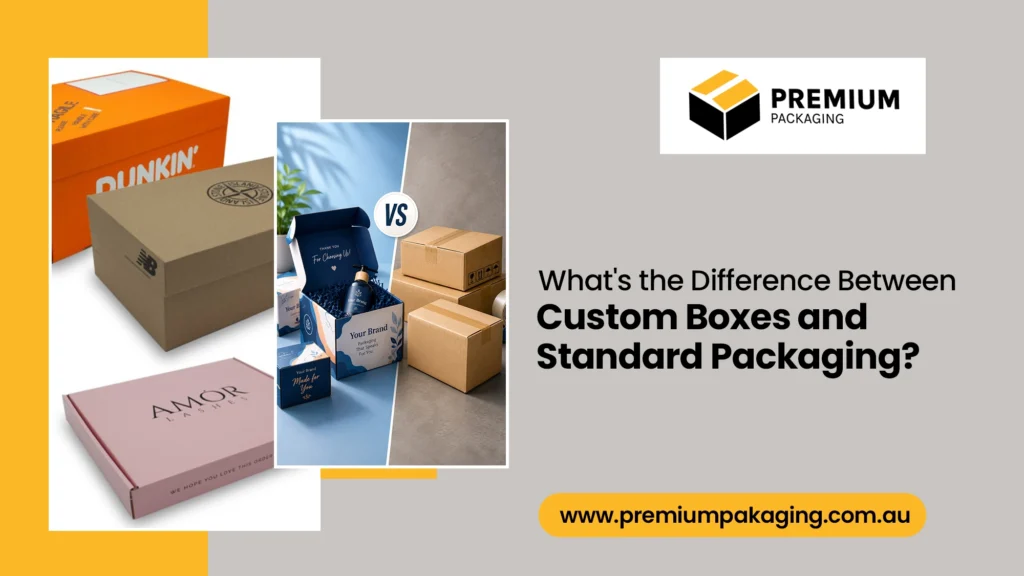
The short answer: standard packaging is made to set, off-the-shelf sizes and specifications that suit a wide range of products, while custom boxes are built to your exact dimensions, structure and branding. Standard packaging wins on speed, low order quantities and cost per unit. Custom boxes win on precise fit, brand presentation and the customer experience. Most businesses use one, the other, or a mix, depending on the job.
Here is how the two compare, and how to work out which suits your operation.
Standard packaging, defined
Standard, or stock, packaging is produced in advance in common sizes and grades, ready to order and dispatch. Think regular slotted cartons, mailing boxes, moving boxes and stock cartons in set dimensions. Because the sizes are pre-made, you can order small or large quantities, receive them quickly, and reorder the same item again without any setup.
Premium Packaging carries a wide range of standard stock boxes, moving boxes and white boxes suited to everyday shipping, storage and retail dispatch across most industries.
Custom boxes, defined
Custom boxes are manufactured to your specification. That can mean a bespoke size cut to fit a particular product, a specific board grade or structure, printed branding, or all three. The result is packaging that fits the product precisely and carries your brand from the warehouse to the customer’s hands.
Custom generally involves a minimum order quantity, an artwork or design step, and a longer lead time than pulling stock off the shelf. In return you get a fit and a finish that off-the-shelf packaging cannot match. Premium Packaging produces wholesale custom boxes printed and sized to your requirements.
The key differences at a glance
| Factor |
Standard packaging |
Custom boxes |
| Sizing |
Set, common sizes |
Built to your exact product |
| Lead time |
Available now, fast dispatch |
Longer; includes proofing and production |
| Minimum order |
Order small or bulk |
Usually a minimum quantity applies |
| Cost per unit |
Lower, especially in small runs |
Higher per unit; improves at volume |
| Branding |
Plain, or add branding separately |
Printed to your design |
| Reorder |
Simple, consistent, repeatable |
Repeatable once artwork is set |
| Best suited to |
General dispatch, storage, mixed ranges |
Retail, brand-led eCommerce, launches |
When standard packaging is the right call
Standard packaging tends to be the smarter choice when:
- You dispatch a varied or changing product range and need flexibility.
- Speed matters and you cannot wait on production lead times.
- Order volumes are modest, or vary week to week.
- The box is a functional shipper the customer will recycle, not a brand moment.
- You want to keep inventory simple and cash tied up in stock low.
For most warehousing, logistics, wholesale and general eCommerce dispatch, a tidy range of stock cartons does the job at the lowest cost and the least fuss.
When custom boxes are worth it
Custom boxes earn their place when:
- Your product has an unusual shape or size that stock cartons fit poorly.
- The unboxing experience is part of how customers judge your brand.
- You ship in consistent volumes that justify a minimum order.
- Branding, product information or a specific structure adds real value.
- A precise fit reduces void fill, damage and freight on high-volume lines.
Retail-led brands, subscription businesses and premium product lines often find the branding and fit pay back the extra cost and lead time.
The hybrid approach: standard boxes with custom branding
Standard and custom are not the only two options. Many businesses get most of the benefit of both by starting with stock boxes and adding branding on top. Custom printed packaging tape, branded labels, printed slips and clean white boxes turn an off-the-shelf carton into a branded parcel without the minimum order or lead time of fully custom boxes. It is a practical middle path for growing businesses testing the water before committing to custom production.
Choosing for your business
Work through these quickly:
- Does a stock size fit your product with a snug allowance? If yes, standard is likely enough.
- Is branding on the box essential, or can it sit on the tape, label or insert?
- What are your volumes, and are they steady enough to justify a minimum order?
- How quickly do you need stock, and can your schedule absorb a production lead time?
- Is the box protecting the product, presenting it, or both?
Your answers usually point clearly to standard, custom, or the hybrid path.
Sustainability considerations
Both standard and custom corrugated packaging can be recyclable, so the bigger environmental lever is often fit and quantity. A well-sized box, whether stock or custom, uses less material and less void fill. With custom, order to realistic volumes so branded stock does not become obsolete after a rebrand or product change. With standard, choose a size range that keeps parcels tight. Pairing either with recyclable bubble wrap and paper-based void fill keeps the whole parcel easy to recover.
Frequently asked questions
What is the main difference between custom boxes and standard packaging?
Standard packaging comes in pre-made, common sizes ready to order and ship quickly. Custom boxes are built to your exact size, structure and branding. Standard suits speed and cost; custom suits fit and presentation.
Are custom boxes more expensive than standard packaging?
Custom boxes usually cost more per unit because of setup, artwork and production, though the gap narrows at higher volumes. Standard packaging is generally cheaper, especially for small or variable orders.
Do custom boxes take longer to arrive than stock boxes?
Yes. Standard boxes can be dispatched from stock, while custom boxes include design approval and a production run, which adds lead time. Plan custom orders ahead of launches or busy periods.
Can I brand standard packaging without ordering custom boxes?
Yes. Custom printed tape, branded labels, sleeves and printed inserts add branding to stock boxes without a minimum order or long lead time. It is a cost-effective middle path before moving to fully custom.
Which is better for my business, custom or standard packaging?
It depends on fit, volume, branding needs and timing. Standard suits general dispatch and varied ranges; custom suits brand-led retail, eCommerce and unusual product sizes. Many businesses use a mix of both.