
Select Category
Buy Wholesale and Bulk Stock Boxes In Australia
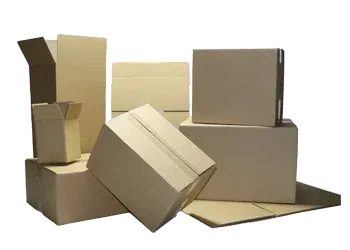
Stock Boxes for Packaging
Stock boxes are pre-manufactured corrugated cartons available in standard sizes, ready to ship without the lead times, tooling costs, or minimum order quantities associated with custom-made packaging. For businesses that need reliable, cost-effective cartons quickly, stock boxes are the practical starting point.
Premium Packaging carries a comprehensive range of stock boxes in the sizes most commonly used across eCommerce, retail, warehousing, manufacturing, and distribution operations in Australia. Every carton in our range is manufactured from quality corrugated cardboard designed for stacking strength, transit protection, and consistent performance across commercial workflows.
Whether you need a small run of shipping cartons for a new product line or pallets of stock boxes for an established fulfilment operation, our range is available in wholesale quantities with fast dispatch from Sydney. Browse the full selection below, or contact our team for guidance on the right size and board grade for your application.
What Are Stock Boxes?
The term “stock boxes” refers to corrugated cartons that are manufactured in standard dimensions and held in inventory, ready for immediate purchase and dispatch. They are the opposite of custom boxes, which are made to order in bespoke sizes, printed with branding, and produced on a per-job basis with longer lead times.
Stock boxes are unprinted (plain brown kraft or white) and come in a fixed set of industry-standard sizes. Because they are produced in high-volume runs and warehoused ahead of sale, they offer three key advantages over custom cartons:
Speed. Stock boxes are available off the shelf. There is no design, tooling, or manufacturing lead time. Orders can be dispatched the same day or next business day, which matters when a product launch moves forward unexpectedly, a new sales channel opens, or your existing box supply runs out faster than forecast.
Lower minimums. Custom box runs typically require minimum order quantities in the hundreds or thousands to be cost-effective. Stock boxes can be purchased in smaller quantities (by the bundle or carton), making them accessible to smaller businesses, seasonal operations, or any company testing a new product before committing to branded packaging.
Cost efficiency. Because stock boxes are produced at scale in a shared manufacturing run, the per-unit cost is lower than that of an equivalent custom box at the same quantity. For businesses where branding on the outer carton is not a priority (for example, items shipped inside branded inner packaging, or B2B shipments where the carton is a functional transit container rather than a customer-facing element), stock boxes deliver the same protection at a lower cost.
Stock boxes are the standard choice for most commercial shipping, warehousing, and storage applications in Australia. Custom boxes become the better option when the carton itself is part of the brand experience (subscription boxes, retail-ready packaging, premium unboxing) or when a non-standard size is required to fit a specific product.
Understanding Box Styles
Stock boxes come in several construction styles, each designed for different product types and packing workflows. Knowing which style suits your application helps avoid wasted space, unnecessary material costs, and packing inefficiencies.
RSC (Regular Slotted Container)
The RSC is the most common stock box style in commercial use. It consists of a single sheet of corrugated board scored and slotted to form four flaps on the top and four on the bottom. The flaps fold inward to close the box, and the outer flaps meet at the centre (or slightly overlap) to be sealed with packaging tape.
RSC boxes are versatile, economical, and easy to assemble. They suit the vast majority of shipping, storage, and general packaging applications. If you are unsure which box style you need, an RSC is almost always the correct starting point.
Die-Cut Mailer Boxes
Die-cut boxes are stamped from a single sheet of corrugated board using a cutting die, then folded into shape without tape or glue to form the basic structure. Common die-cut styles include tuck-front mailer boxes (where a front panel tucks into the box body), crash-lock base boxes (where the base folds and locks into position automatically), and self-locking pizza-style boxes.
Die-cut mailers are popular in eCommerce because they provide a clean, professional unboxing experience and can be assembled quickly by fulfilment staff. They are typically used for smaller, lighter items where the box itself contributes to the customer presentation.
Telescope Boxes (Two-Piece)
Telescope boxes consist of a separate base tray and a lid that slides over the top. This two-piece construction provides easy access to the contents and allows the lid to be removed and replaced repeatedly, which suits products that are frequently displayed, stored, or accessed.
Telescope boxes are commonly used for archival document storage, retail display packaging, and products that ship in an outer sleeve or tray. They are less common in high-volume eCommerce shipping because the two-piece format is slower to assemble than an RSC.
Folder Boxes (Wrap-Around)
Folder boxes are flat sheets of scored corrugated board that wrap around the product and are folded and sealed on-site. They are used for flat items like books, framed prints, tiles, panels, and circuit boards, where a tight wrap provides better protection than placing the item inside a conventional box with empty space around it.
Folder boxes reduce material usage and dimensional weight charges because they conform to the product size rather than enclosing a fixed volume of air. They are widely used by online bookstores, print shops, and any business shipping flat, rigid items.
Board Grades and Wall Construction
The strength and weight rating of a stock box is determined by the corrugated board it is made from. Two factors matter most: the wall construction (how many layers of corrugation the board contains) and the flute profile (the size and spacing of the corrugated waves inside the board).
Single-Wall Corrugated
Single-wall board consists of one layer of fluted corrugation sandwiched between two flat liner sheets. It is the standard construction for most stock boxes used in shipping, eCommerce, and general storage. Single-wall boxes are lighter, more cost-effective, and easier to fold and assemble than double-wall alternatives. They are suitable for products up to approximately 20 to 25 kilograms, depending on the flute profile and box dimensions.
Double-Wall Corrugated
Double-wall board has two layers of fluted corrugation separated by an additional flat liner sheet, creating a five-layer construction. Double-wall boxes are significantly stronger and more rigid than single-wall, with higher stacking strength and greater resistance to puncture and compression. They are the correct choice for heavy, fragile, or high-value products, and for any application where boxes will be stacked multiple layers high on pallets or in warehouse racking.
Flute Profiles
The flute profile refers to the height and spacing of the corrugated waves inside the board. Common profiles include:
B-Flute (approx. 2.5mm). A fine flute that produces a thinner, smoother board with a flat surface well suited to die-cut boxes, printed packaging, and retail-ready applications. B-flute is the standard for mailer boxes and lighter shipping cartons.
C-Flute (approx. 3.5mm). The most widely used flute for general-purpose stock boxes and shipping cartons. C-flute provides a strong balance between cushioning, stacking strength, and material economy. The majority of RSC stock boxes are manufactured in C-flute single-wall.
BC-Flute (double-wall, approx. 6mm). A combination of B-flute and C-flute layers is used in double-wall construction. BC-flute boxes are used for heavy-duty applications where maximum strength is required.
If your products are relatively light and you are shipping via standard courier, single-wall C-flute stock boxes will meet most requirements. If you are shipping heavy, fragile, or high-value goods, or stacking boxes on pallets for long-distance transport, double-wall or BC-flute boxes provide the additional protection needed.
How to Select the Right Stock Box Size
Choosing the correct stock box size is a balance between product protection, material cost, and shipping economics. A box that is too large wastes material, increases dimensional weight charges from couriers, requires more void fill to prevent product movement, and creates a poor unboxing experience. A box that is too tight risks damaging the product during insertion and leaves insufficient room for protective packaging around the item.
The practical approach is to measure your product at its widest, tallest, and deepest points, then add a margin of 20 to 40 millimetres on each dimension to allow space for protective wrapping, void fill, or cushioning material. This produces a snug but safe fit that minimises wasted space while allowing adequate protection.
For businesses shipping a consistent product range, auditing your top five to ten SKUs and matching each to the closest stock box size can reduce your box inventory from dozens of ad-hoc sizes down to a handful of optimised standards. This simplification speeds up packing, reduces storage requirements, and improves purchasing efficiency because you are ordering higher volumes of fewer box sizes.
If none of the standard stock box sizes in our range provides a practical fit for your product, our team can discuss custom sizing options. However, for most commercial shipping and storage applications, the standard stock box range covers the dimensions most commonly required by Australian businesses.
Industries That Rely on Stock Boxes
Stock boxes are a foundational consumable across virtually every industry that ships, stores, or distributes physical goods. Their ready availability and standard sizing make them the default packaging solution for operations that do not require custom branding on the outer carton.
eCommerce and Online Retail
Online retailers are the highest-volume users of stock boxes in Australia. Every order shipped requires a carton, and the pace of e-commerce fulfilment means boxes need to be available immediately, not subject to manufacturing lead times. Stock boxes in small, medium, and large sizes allow fulfilment teams to match each order to the closest box size, reducing dimensional weight charges and improving the delivery experience.
Warehousing and Distribution
Warehouses use stock boxes for repacking goods, consolidating orders, shipping inventory to retail locations, and storing products on racks and shelves. Consistent box sizing is particularly important in warehouse environments because standardised dimensions optimise pallet configurations, maximise truck capacity, and simplify automated scanning and sortation systems.
Manufacturing
Manufacturers pack finished goods into stock boxes for distribution to wholesalers, retailers, and end customers. For products where the primary packaging (the retail box, bottle, pouch, or bag) carries the branding, a plain stock box as the outer shipping container is the most cost-effective approach. Manufacturers also use stock boxes for internal parts storage, inter-factory transfers, and work-in-progress staging.
Retail and Brick-and-Mortar
Retailers use stock boxes to receive and store inventory in back-of-house areas, ship online orders from the store, and package click-and-collect orders. For retailers operating across multiple locations, standardising on a core set of stock box sizes across the network simplifies procurement and ensures every store has the right packaging available.
Corporate and Office Environments
Offices use stock boxes for archival document storage, inter-office mail, IT equipment shipping, and general supplies management. Stock boxes in small and medium sizes are common in corporate environments for organising and transporting files, stationery, and equipment during office moves, floor reorganisations, and refurbishments.
Stock Boxes vs Custom Boxes: When to Upgrade
Stock boxes serve most shipping and storage needs, but there are clear scenarios where investing in custom packaging delivers a measurable return. Understanding the decision point helps your business allocate packaging budget where it creates the most value.
Stay with stock boxes when: the outer carton is purely functional, and the customer does not see it (B2B shipments, pallet-to-pallet transfers, internal storage), when order volumes are low or variable and custom minimums are not justified, when speed of availability matters more than branding, or when the product inside already has its own branded retail packaging.
Consider custom boxes when: the outer carton is the first thing the customer sees and touches (direct-to-consumer eCommerce, subscription boxes, gifting), when you need an exact size that reduces void fill and dimensional weight charges across thousands of shipments, when your brand identity requires consistent presentation from the outside of the box inward, or when regulatory labelling or handling instructions need to be printed directly on the carton.
Many businesses start with stock boxes and transition to custom packaging as their order volumes grow and their brand requirements become more defined. Stock boxes are an ideal bridge solution during that growth phase, providing reliable, professional packaging without the upfront investment of a custom run.
Frequently Asked Questions
What are stock boxes?
Stock boxes are pre-manufactured corrugated cartons available in standard sizes, ready for immediate purchase and dispatch. They are plain (unprinted) and produced in industry-standard dimensions, making them the fastest and most cost-effective option for businesses that need shipping, storage, or packaging cartons without the lead time of custom manufacturing.
What sizes of stock boxes do you carry?
We stock a comprehensive range of standard sizes, from compact cartons suited to small eCommerce items through to large boxes designed for bulky goods, appliances, and multi-item shipments. Dimensions are listed on each product in the range. If you need a specific size that is not listed, contact our team to discuss availability or custom options.
Are your stock boxes single-wall or double-wall?
Our stock box range includes both single-wall and double-wall options. Single-wall boxes suit the majority of shipping and storage applications for products up to approximately 20 to 25 kilograms. Double-wall boxes are available for heavier, fragile, or high-value items that need additional strength and compression resistance.
Can I get stock boxes with my logo printed on them?
Stock boxes are supplied plain (unprinted). If you need branded cartons with your logo, colours, or handling instructions, our team can discuss custom printing options. Custom-printed boxes typically require minimum order quantities and additional lead time.
What is the minimum order quantity?
Stock boxes are sold in bundles or carton quantities, with lower minimums than custom packaging. Specific quantities vary by product size. Contact our team for details on bundle sizes and volume-based pricing.
How quickly can you deliver stock boxes?
Because stock boxes are held in inventory, they are available for fast dispatch. Standard delivery timeframes vary by location, with most Sydney metro orders arriving within a few business days. For urgent or time-sensitive requirements, speak with our team about priority dispatch options.
Are your stock boxes recyclable?
Yes. All corrugated cardboard stock boxes in our range are 100% recyclable through standard kerbside recycling. Corrugated cardboard is one of the most widely recycled materials in Australia, with recovery rates consistently exceeding 60%.
How do I choose the right stock box size?
Measure your product at its widest, tallest, and deepest points, then add 20 to 40 millimetres to each dimension to allow space for protective wrapping or void fill. Select the closest stock box size that accommodates those dimensions. If you are unsure, our team can recommend the best fit based on your product specifications.