How to Wrap a Pallet Correctly: Step-by-Step Guide (Manual and Machine)?
A pallet is only as secure as the wrap that holds it together. Wrap it well and the load travels as a single stable block. Wrap it poorly and cartons shift, corners crush and the whole stack can lean or collapse in transit, which means damaged goods, safety risks on the dock and a load that may fail a restraint check. The good news is that wrapping a pallet correctly is a repeatable skill, and this guide sets out the method for both hand and machine wrapping.
It is written for warehouse and dispatch teams, packing station operators and anyone training staff to wrap loads that arrive the way they left.
Why Correct Pallet Wrapping Matters?
Stretch film binds a stacked load so the cartons act as one unit rather than many loose boxes. Done properly, it holds the stack steady through forklift handling, linehaul vibration and multiple freight touchpoints, keeps dust and moisture off the goods, and forms part of your load restraint duties for road transport. Done poorly, it wastes film and still lets the load move. The steps below are about getting a secure result every time without over-wrapping.
Before You Wrap: Preparation
Inspect the Pallet
Start with a sound pallet that suits the load. Check for cracked or missing boards, protruding nails and splinters, and make sure it can carry the full weight. A damaged pallet undermines even the best wrap.
Stack the Load Correctly
Build a stable base. Place heavier cartons on the bottom and lighter ones on top, keep items square and close together, and keep the load flush with the pallet edges with no overhang. Overhanging cartons lose their corner support and are the first to crush. Secure any loose or unstable items before you begin.
Protect Edges and Corners
For loads with sharp or fragile edges, fit corner protectors before wrapping. They stop the film from cutting on sharp corners and spread strapping or film pressure across the edge. For dust or weather protection, a pallet top sheet over the top of the load adds a barrier and can improve stability.
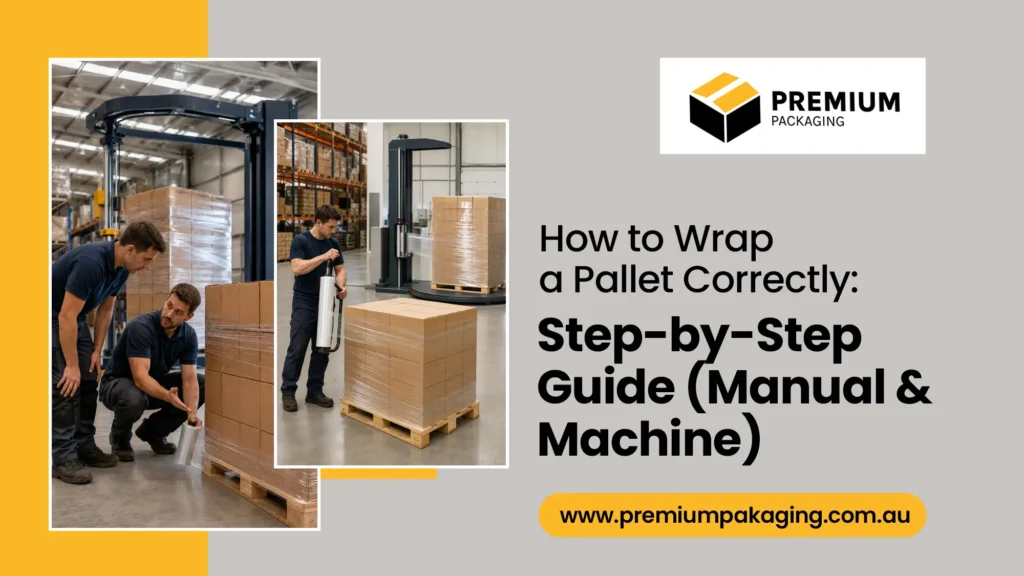
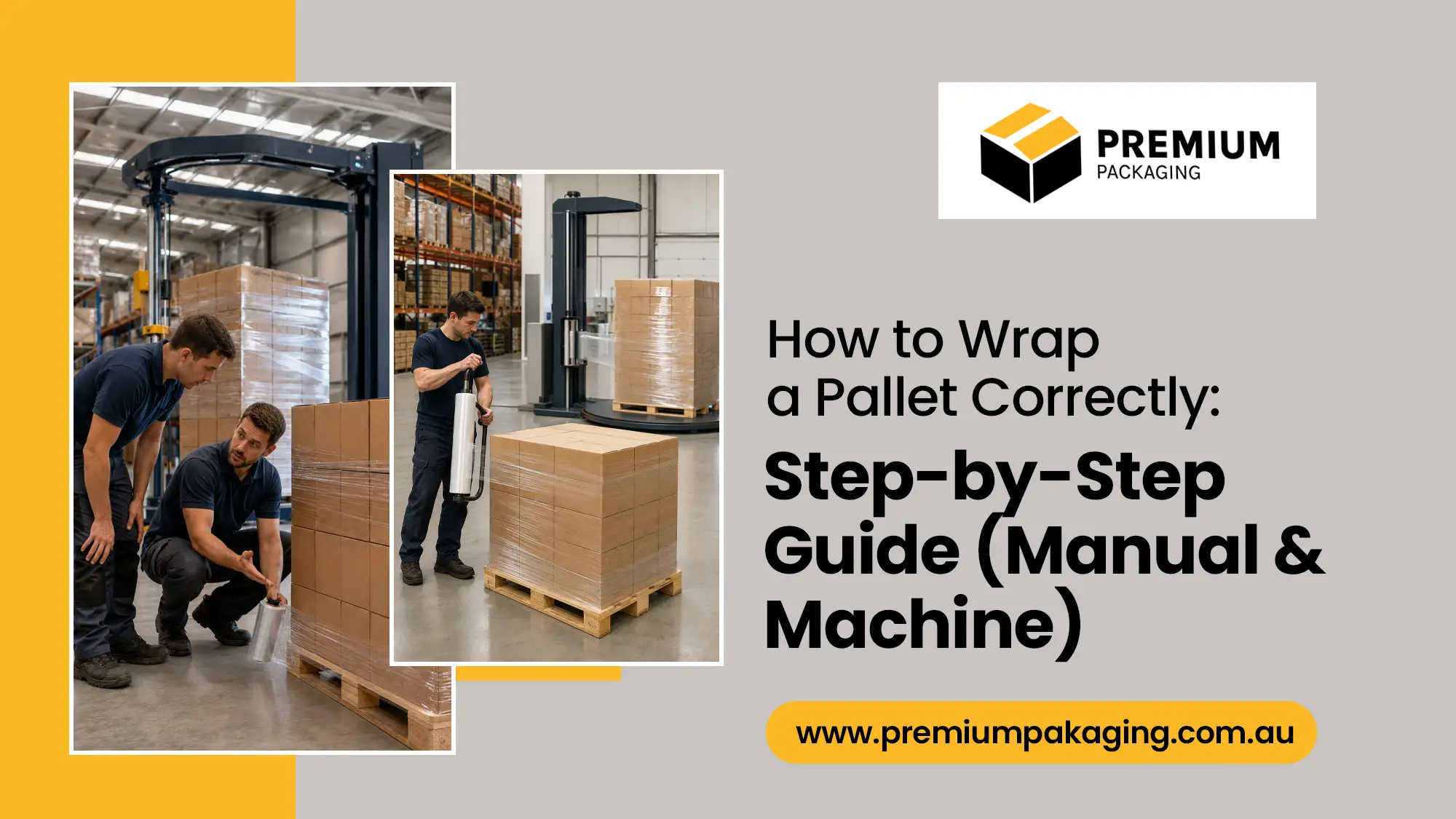
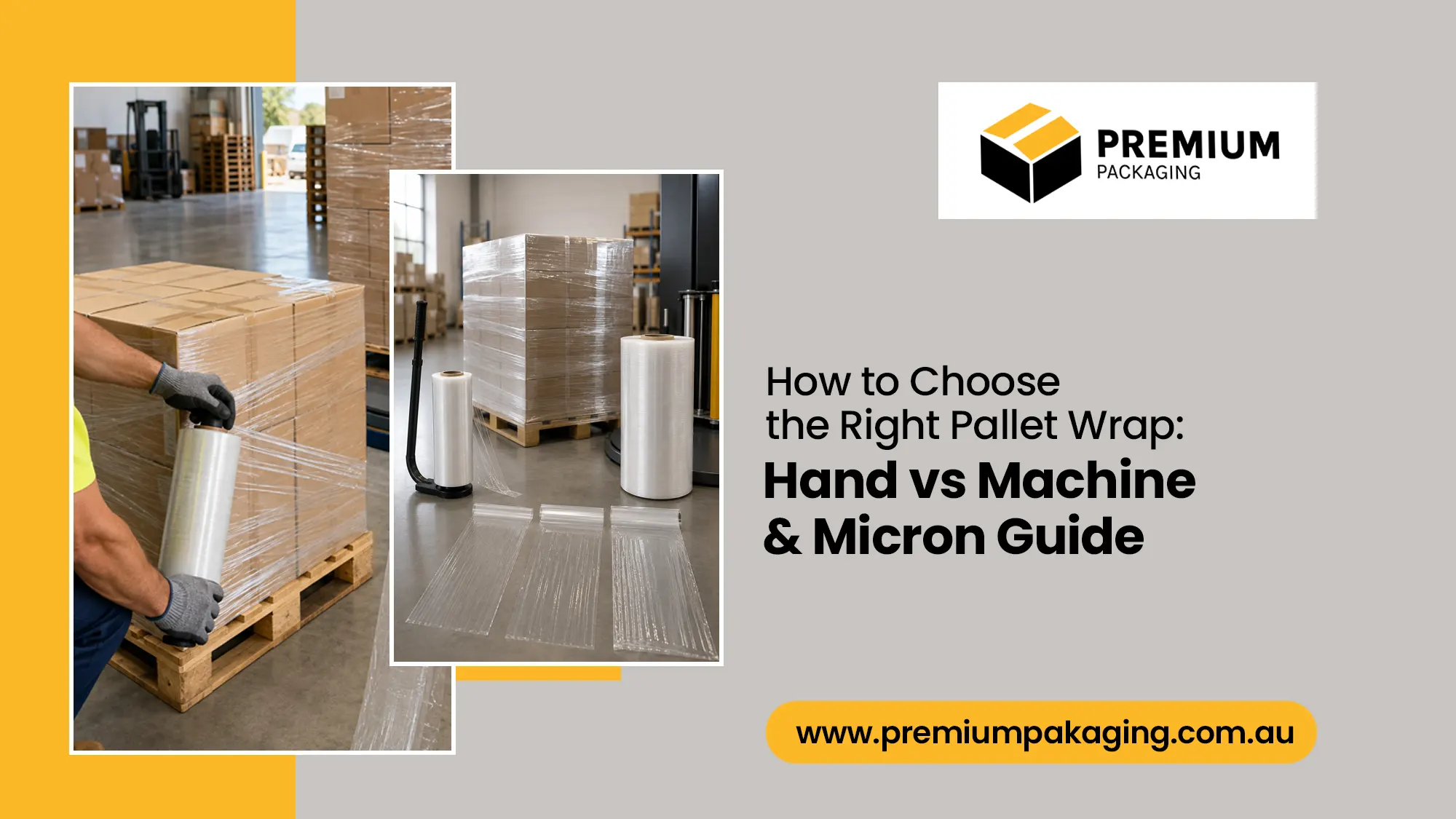
How to Wrap a Pallet by Hand: Step by Step?
Step 1: Anchor the film to the base Tuck the film tail into a bottom corner of the load, or twist the film into a rope and thread it through a pallet slat. This creates a grip point that stops the wrap slipping as you start.
Step 2: Wrap the base and lock the load to the pallet Circle the base three to four times, taking the film over both the bottom cartons and the pallet itself. This step ties the load to the pallet and is the single most important part of a secure wrap.
Step 3: Spiral up the load with 50% overlap Work upward in a spiral, overlapping each pass over the one below by about half. Keep the film under steady, even tension so it stretches and grips without slack, all the way to the top of the load.
Step 4: Reinforce corners and weak points Add extra passes over corners and any heavy or unstable sections. A figure-8 around the corners of fragile or top-heavy loads spreads the holding force where it is needed most.
Step 5: Wrap back down and finish tight For taller or heavier loads, spiral back down for a second pass so the whole stack has even coverage. Finish with a couple of turns back at the base to lock everything in.
Step 6: Cut and tuck the tail Cut the film and press the tail firmly onto a wrapped layer so it sticks to itself and does not trail. A loose tail can catch on equipment and unravel the wrap.
Step 7: Inspect the wrapped pallet Check the load is stable and upright, the tension is even with no large gaps, and the corners are covered. If the stack shifts when nudged, unwrap, re-stack for balance and wrap again.
How to Wrap a Pallet by Machine?
A wrapping machine applies film faster and with the same tension and overlap on every pallet, which is where higher volume operations gain. The load runs on a turntable or under a rotary arm, and machine pallet wrap is wound on long rolls made for the equipment. The general sequence is:
Place the prepared pallet on the turntable, or position it under the rotary arm, and attach the film tail to the load or clamp.
Set the machine for the load: film tension, overlap, pre-stretch level, and the number of wraps at the base and top.
Run the cycle so the machine spirals up and down with consistent tension and overlap, locking the base to the pallet as it goes.
Let the machine cut and, on many models, tuck the tail, so the operator can stay on the forklift.
Check the finished wrap and fine-tune the settings if the load needs more containment.
Turntable wrappers suit most uniform loads, rotary arm wrappers suit very heavy, tall or unstable loads that should not spin, and horizontal wrappers suit long products such as timber, doors or profiles.
Manual vs Machine: Which Should You Use
As a rough guide, operations wrapping more than 15 to 20 pallets a day usually gain from a machine through faster cycles, consistent tension and less manual handling. Lower volumes, multi-site operations and irregular loads are well suited to hand wrapping. Many growing operations run both, with a machine on the main line and hand rolls for overflow and odd-sized loads.
Choosing the Right Film for the Job
The wrap is only as good as the film. Cast hand pallet wrap is clear and quiet for general hand wrapping, blown hand pallet wrap offers higher puncture resistance for heavy or sharp-cornered loads, and white pallet wrap conceals contents and reflects heat for outdoor or temperature-sensitive freight. Browse the full pallet wrap and stretch film range to match the film to your loads.
Common Pallet Wrapping Mistakes to Avoid
Mistake
Why it fails and the fix
Not wrapping the pallet base
The load is never tied to the pallet and slides off in transit. Always wrap over the bottom cartons and the pallet.
Too few base wraps
The load detaches from the pallet under handling. Circle the base three to four times before spiralling up.
Overhanging cartons
Corners lose support and crush. Keep the load flush with the pallet edges.
Uneven or too little tension
The load shifts and leans. Keep steady, even tension on every pass.
Too much tension or wrong film
The film breaks mid-wrap. Ease the tension or move to a higher micron or blown film.
Skipping corner protection
Sharp edges cut the film and fragile corners crush. Fit corner protectors first.
Load Restraint and Chain of Responsibility
Under Australia’s Chain of Responsibility provisions in the Heavy Vehicle National Law, every party in the supply chain shares legal accountability for loads being safely restrained for road transport, and that includes the businesses that pack and wrap them. A correctly wrapped pallet, anchored to the base with adequate film layers and full containment, is part of meeting that duty. For very heavy loads, stretch film alone may not be enough, and pallet strapping adds mechanical load security.
How Premium Packaging Supports Your Wrapping?
Premium Packaging is a Sydney-based wholesale supplier stocking hand and machine pallet wrap and stretch film, corner protection and strapping for heavier loads, so you can secure a pallet correctly from one supplier. Our specialists match film, format and accessories to your loads, wrapping equipment and freight lanes.
Stock is held at our Werrington warehouse with delivery across Sydney, Melbourne, Brisbane, Adelaide, Perth and regional Australia, and recurring supply keeps your wrapping lines running as volumes grow. For more on securing pallet loads, see our pallet packaging tips and the wider Premium Packaging blog.
Frequently Asked Questions
How many times should you wrap a pallet?
Wrap the base three to four times to lock the load to the pallet, then spiral up and back down with about 50% overlap on each pass. Heavier or taller loads need more passes for stability.
Should stretch wrap go around the pallet base?
Yes. The film should wrap over both the bottom cartons and the pallet itself to anchor the load. Skipping the base is the most common reason loads shift or slide off during transport.
How much should each layer of stretch wrap overlap?
Aim for about 50% overlap on each pass, increasing to around 75% for heavier or less stable loads. Consistent overlap and even tension give a secure, wrinkle-free wrap.
When should I switch from hand wrapping to a machine?
Once you are wrapping more than roughly 15 to 20 pallets a day, a machine gives faster, more consistent wraps and reduces manual handling. Lower volumes and irregular loads are well suited to hand wrapping.
How do I stop stretch film from breaking while wrapping?
Reduce your stretch tension and cover any sharp edges with corner protection. If the film still breaks, move to a higher micron or a more puncture-resistant blown film for the load.