Failed a safety audit? The warning and barrier tape your warehouse is missing
A failed safety audit is rarely about one big hazard. It is usually a list of small, fixable gaps: an unmarked forklift lane, a step with no grip, a spill zone left open, a switchboard with nothing warning people off. Tape closes a surprising number of these findings, quickly and without waiting on a contractor. This guide maps the common audit findings to the warning, barrier and floor marking tape that fixes them, so you can prepare for the recheck.
It is written for WHS officers, operations managers and warehouse supervisors. It is general guidance rather than legal advice, and your specific obligations depend on your operation and the relevant work health and safety regulator.
Why tape is a front-line safety control
Under work health and safety law, businesses have a duty to identify hazards and put controls in place, and visual controls are one of the most practical. Floor marking, hazard warning and barrier tape guide traffic, flag dangers and cordon off risks so people can see and avoid them. Tape is fast to apply, easy to change when a layout shifts, and needs no specialist installation, which makes it a sensible first control for the everyday hazards an audit tends to pick up.
The common audit findings tape fixes
No separation between pedestrians and forklifts
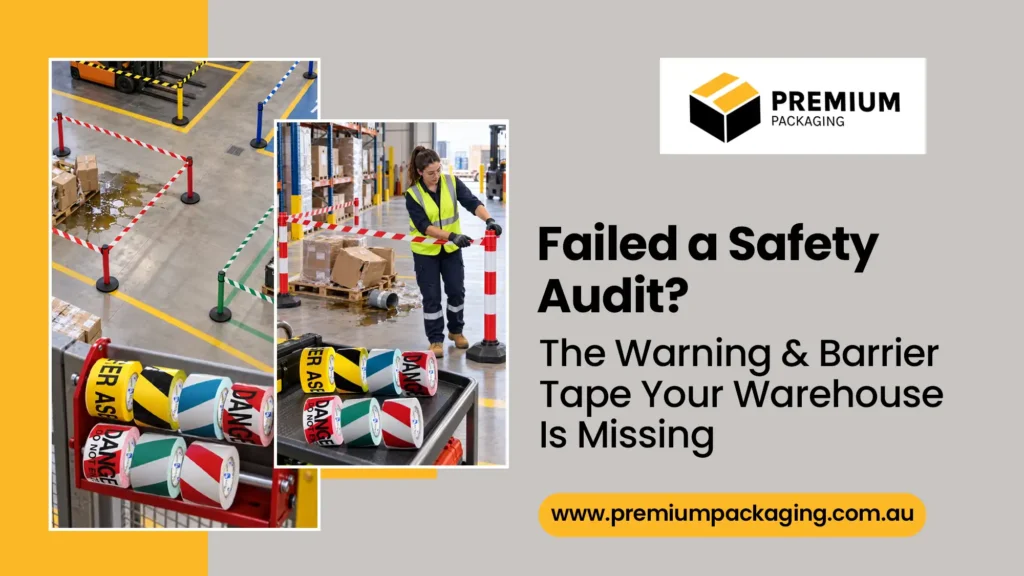
Mixing foot traffic and forklifts is one of the most serious and most commonly flagged warehouse risks. Durable line marking tape marks pedestrian walkways, forklift lanes, one-way aisles and crossing points, giving people a clear, visible path away from moving machinery.
Unmarked hazards and caution zones
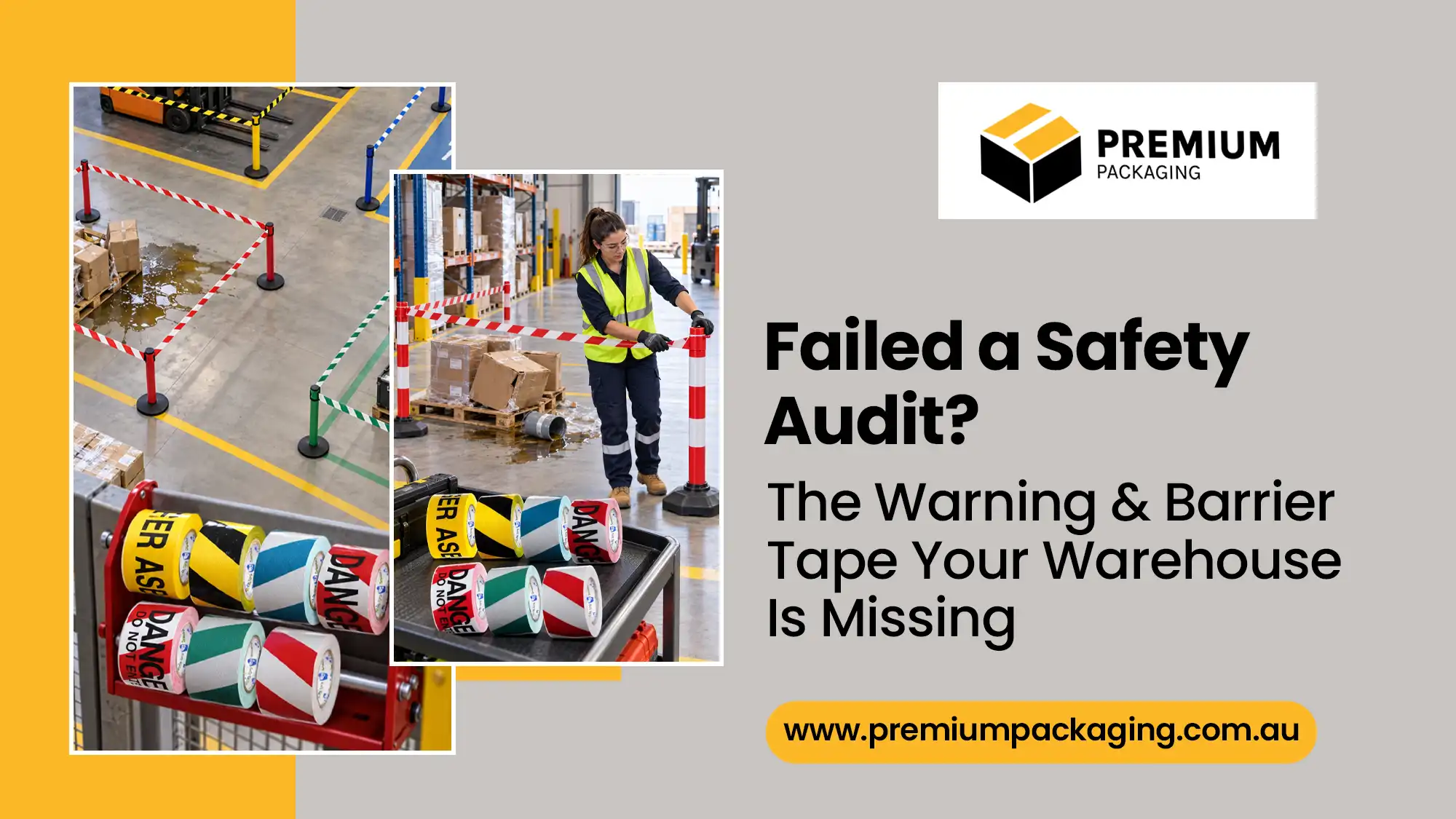
Edges, low clearances, pinch points, switchboards and machinery that people need to keep clear of are regularly written up when they carry no warning. Yellow and black hazard tape draws the eye to these points and signals that caution is needed before entering the space.
Slippery stairs, ramps and walkways
Slips, trips and falls are among the most common workplace injuries, and smooth stairs, ramps and wet areas are frequent audit findings. Anti-slip tape adds a gritted, high-grip surface to treads, ramps and walkways, and comes in high-visibility colours so the edge is easy to see as well as safer to stand on.
Temporary hazards left open
Spills, damaged racking, maintenance work and wet floors need to be cordoned off while they are dealt with. Barrier tape, a highly visible non-adhesive tape, quickly cordons a temporary hazard or restricted zone and warns people away until the risk is cleared.
Unclear emergency exits and equipment
Blocked exits, unmarked fire equipment and stock stacked in front of switchboards are common and serious findings. Red and white floor marking keeps these areas clear, and warning labels on a roll add the signal words and symbols that identify what must not be blocked.
A quick guide to safety tape colours
Colour carries meaning in a warehouse, and audits expect it to be used consistently. The conventions below are widely used across Australian workplaces:
Stocking these before the next inspection means most findings can be closed on the spot:
Line marking tape: pedestrian walkways, forklift lanes, aisles and zone borders.
Hazard warning tape: yellow and black striping for edges, equipment and caution zones.
Anti-slip tape: stairs, ramps, loading docks and wet or high-traffic areas.
Barrier tape: cordoning off spills, maintenance and temporary hazards.
Warning labels on a roll: signal words and symbols for exits, equipment and hazards.
Getting it right: application and standards
Tape only works as a control if it is applied and specified correctly. Clean and dry the surface first, and lay floor tape flat without stretching it so it stays down under traffic. Use a durable PVC floor marking tape where forklifts and foot traffic will cross it, since a light tape will not last. Match the product to the recognised standard for the job, such as the safety sign standard for warning colours and signal words, and slip-resistance ratings for anti-slip products. Inspect the markings regularly and replace any that are worn or peeling, because faded or lifting tape is itself an audit finding.
How Premium Packaging helps you pass the recheck
Premium Packaging is a Sydney based wholesale supplier stocking line marking tape, hazard and anti-slip tape, barrier tape and warning labels, as part of a full packaging tape and dispenser range. Our specialists help you work through your audit findings and match the right tape, colour and grade to each hazard, so the fix holds up to both traffic and the next inspection.
Stock is held at our Werrington warehouse with delivery across Sydney, Melbourne, Brisbane, Adelaide, Perth and regional Australia, and recurring supply keeps your safety consumables on hand. For more on tape selection, see our types of tape guide on the Premium Packaging blog.
Frequently asked questions
Can tape really help us pass a safety audit?
Yes, for many common findings. Line marking, hazard, anti-slip and barrier tape address unmarked traffic lanes, hazards, slippery surfaces and open danger zones, which are among the issues audits flag most often. Larger structural hazards still need engineering controls.
What colour tape is used for hazards in a warehouse?
Yellow and black diagonal striped tape is the common choice for physical hazards and caution zones, while red and white marks fire and emergency equipment that must stay clear. Solid yellow usually marks aisles and walkways.
What is the difference between barrier tape and floor marking tape?
Barrier tape is a highly visible, usually non-adhesive tape for cordoning off temporary hazards like spills or maintenance zones. Floor marking tape is a durable adhesive tape for long-term aisle, walkway and zone marking.
Is anti-slip tape a WHS requirement?
Slips, trips and falls are a duty-of-care matter under work health and safety law, and anti-slip tape on stairs, ramps and wet areas is a common, practical control. The specific obligation depends on the hazard and your jurisdiction’s regulator.
Do safety tapes meet Australian Standards?
Quality safety tapes are made to align with the relevant standards, such as the safety sign standard for warning colours and slip-resistance ratings for anti-slip products. Check the product specification for the standard that applies to your use.