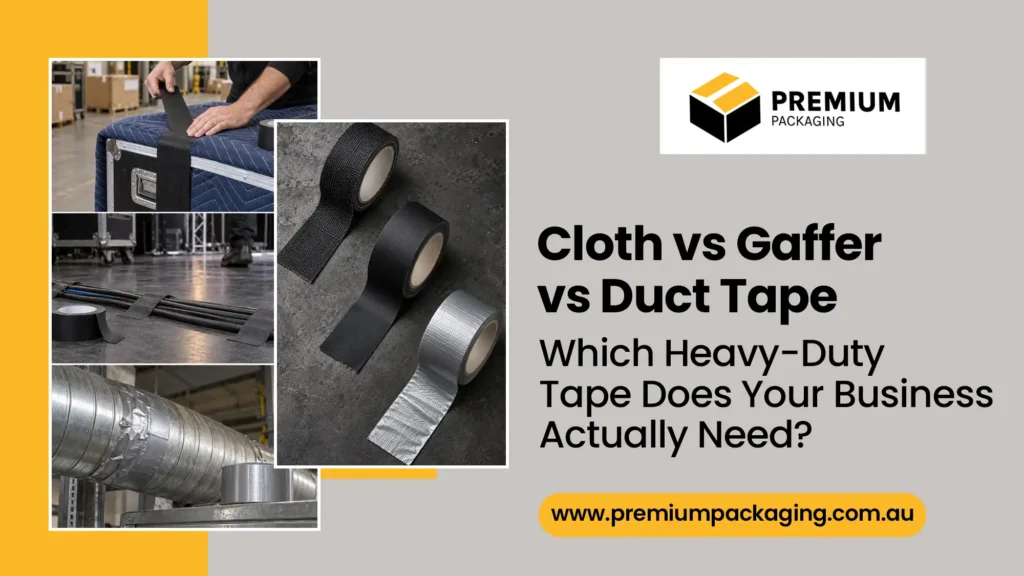
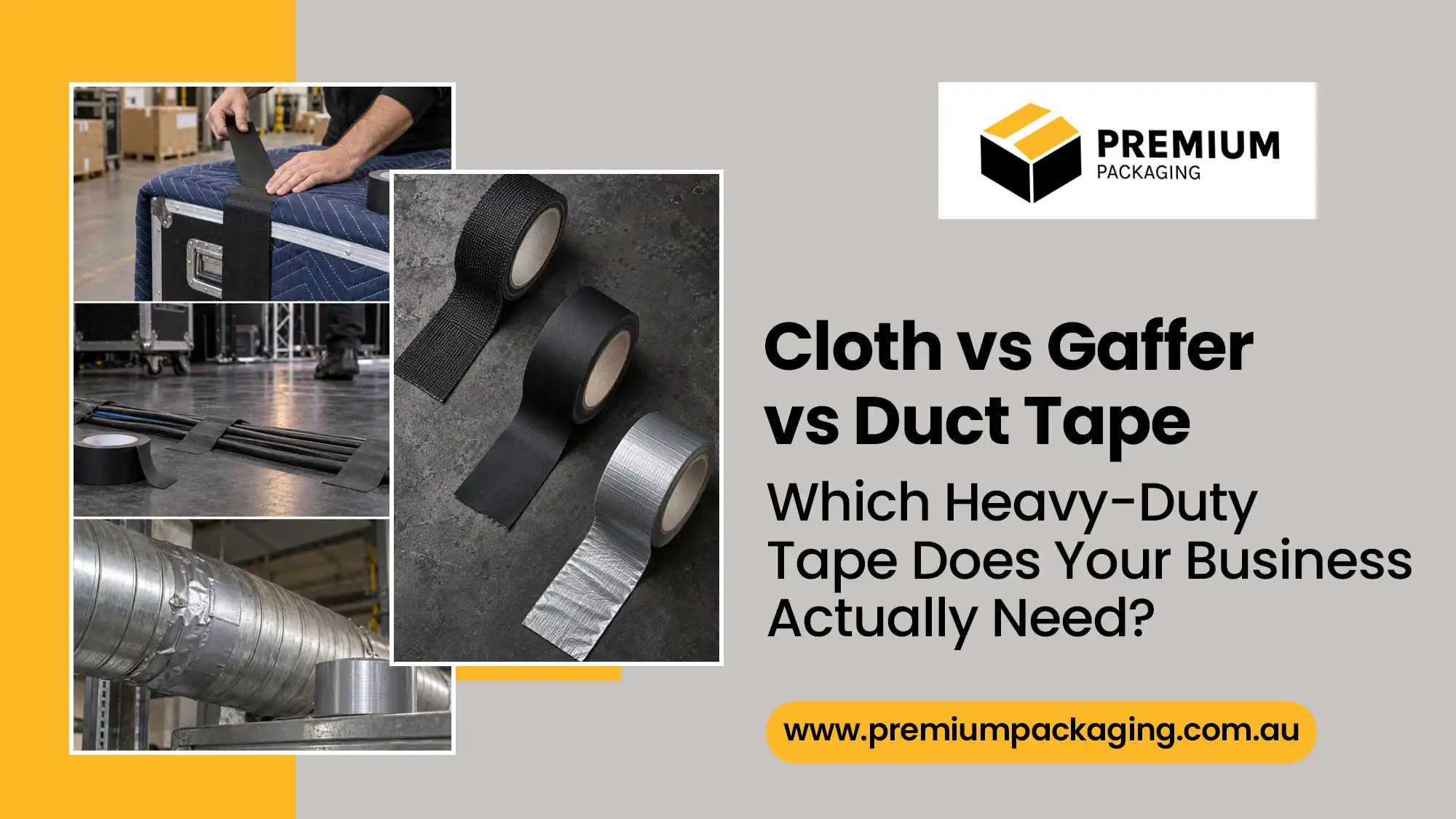
Cloth vs gaffer vs duct tape: which heavy-duty tape does your business actually need?
On a busy site, cloth tape, gaffer tape and duct tape often end up in the same drawer and get used for whatever job is in front of someone. They look almost identical, a heavy fabric backing with a strong adhesive, but they are not interchangeable. Reach for the wrong one and you get adhesive residue baked onto equipment, a repair that lets go in the wet, or a premium roll used up on a job a general tape would have handled. This guide sets out how the three differ and, more usefully, which one your business should keep on the shelf for each task.
It is written for facilities and maintenance teams, warehouse and logistics operators, event and AV crews, and procurement teams standardising what their sites order.
They look similar, but they are built differently
All three are pressure-sensitive tapes with a cloth or cloth-reinforced backing, which is what gives them their strength, flexibility and clean hand tearing. The differences come down to three things: the backing treatment, the adhesive, and how cleanly the tape comes off again. Those three factors decide which tape belongs on which job.
Cloth tape: the general-purpose all-rounder
Cloth tape is a woven cloth backing coated with a pressure-sensitive adhesive. It is strong, flexible, tears cleanly by hand and conforms to uneven surfaces, which makes it the everyday heavy-duty tape for a wide range of tasks. Its adhesion is balanced, holding firmly without the aggressive grab of duct tape or the premium clean-removal focus of gaffer tape. It is water-resistant and suits general indoor and light outdoor use.
Best for: bundling, seaming and joining, reinforcing, colour-coding zones or stock, and general repairs and maintenance where one dependable heavy-duty roll needs to cover mixed jobs.
Gaffer tape: clean removal and surface safe
Gaffer tape is a premium cloth tape with a matte, non-reflective finish and a low-residue synthetic rubber adhesive engineered to peel away cleanly. The woven backing tears straight and clean by hand. It holds firmly during use, then lifts off without leaving sticky residue or pulling paint and finishes, and it is water and heat resistant enough for demanding indoor work. That clean removal is what sets it apart.
Best for: securing cables across floors and walkways, marking stages and floor zones, labelling equipment and temporary fixing where the surface must not be damaged. Events, AV, film, exhibitions, studios, gyms and retail fit-outs rely on it.
Duct tape: strong, waterproof and semi-permanent
Duct tape is a polyethylene-coated cloth backing with an aggressive rubber-based adhesive. It has a glossy finish, resists water and bonds hard to a wide range of surfaces. It is built for strength and sealing rather than clean removal, so it is a semi-permanent choice. The trade off is residue and possible surface marking when it comes off, and the adhesive can weaken under long-term heat or UV, so it is best matched to jobs where a strong bond matters more than a clean lift.
Best for: sealing and weatherproofing, bundling heavy materials, holding and repairs, joining sheeting and covers, and damp or outdoor conditions where grip matters most.
Cloth vs gaffer vs duct: side by side
Feature
Cloth tape
Gaffer tape
Duct tape
Backing
Woven cloth
Woven cloth, matte finish
Polyethylene-coated cloth
Adhesive
Balanced pressure-sensitive
Low-residue synthetic rubber
Aggressive rubber-based
Removal
Some residue possible
Clean, low residue
Can leave residue, mark surfaces
Water resistance
Water-resistant
Resists light moisture
Water-resistant, better in wet
Hold type
General-purpose
Temporary, surface safe
Semi-permanent, strong
Best surfaces
Mixed, general utility
Sensitive or borrowed surfaces
Rough, damp, non-sensitive
Typical use
Bundling, seaming, repairs
Cables, floors, events, AV
Sealing, weatherproofing, repairs
Which tape does your business need?
Start from what the job demands rather than what is nearest on the bench:
Must come off cleanly and not mark the surface: choose gaffer tape.
Must seal, waterproof or hold hard in a semi-permanent way: choose duct tape.
One dependable roll for everyday bundling, seaming and repairs: choose cloth tape.
Many sites stock all three and brief their teams on which is which, so the premium clean-removal tape is not used up on a job a general cloth tape would do, and a residue-prone tape never ends up on sensitive or borrowed equipment.
Matching tape to your industry
Events, AV, film and exhibitions: gaffer tape for cable safety, floor marking and clean removal from venues and hire equipment.
Warehousing and logistics: cloth tape for bundling, seaming and colour-coding, and duct tape for sealing and weatherproofing covers and sheeting.
Manufacturing and maintenance: duct tape for repairs, sealing and holding, and cloth tape for general utility and reinforcing.
Construction and trades: duct tape for weather-exposed holding and sealing, and cloth tape for bundling and site marking.
Retail and fit-out: gaffer tape for temporary display setups and floor runs that must lift cleanly afterwards.
A note on residue and surface damage
In a commercial setting, residue is not a cosmetic issue. Adhesive left on hire equipment, leased premises, vehicles or finished surfaces can mean cleaning time, damage claims or replaced parts. This is the practical reason gaffer tape earns its place on valuable or borrowed surfaces, while duct tape is kept to jobs where a permanent bond and possible residue are acceptable. For sealing and joining tasks in tougher industrial conditions, a dedicated sealing and joining tape is often the better specification. Matching the tape to the surface protects both the hold and the asset.
How Premium Packaging helps you choose
Premium Packaging is a Sydney based wholesale supplier stocking cloth tape, gaffer tape and duct tape in the widths, colours and grades your work calls for, as part of a full packaging tape and dispenser range. Our specialists help you standardise which tape each team keeps on hand, so sites use the right tape for the job rather than whatever is nearest.
Stock is held at our Werrington warehouse with delivery across Sydney, Melbourne, Brisbane, Adelaide, Perth and regional Australia, and recurring supply keeps every site stocked. For a closer look at two of these tapes, see our gaffer tape vs duct tape comparison, and for the full picture our types of tape buying guide on the Premium Packaging blog.
Frequently asked questions
What is the difference between cloth, gaffer and duct tape?
All three have a cloth backing, but they are built for different jobs. Cloth tape is a general-purpose heavy-duty utility tape, gaffer tape is engineered for clean, residue-free removal, and duct tape has an aggressive waterproof adhesive for strong semi-permanent holds.
Is gaffer tape the same as cloth tape?
Gaffer tape is a type of cloth tape, but it is a premium version with a matte finish and a low-residue adhesive made for clean removal. Standard cloth tape is a broader, general-purpose heavy-duty option for everyday tasks.
Which tape leaves no residue?
Gaffer tape is designed to peel away cleanly without residue or surface damage, which is why it suits cables, floors and equipment. Duct tape and standard cloth tape are more likely to leave residue on removal.
Is duct tape waterproof?
Duct tape is water-resistant rather than fully waterproof. Its polyethylene coating handles damp conditions and short-term sealing well, but prolonged water exposure can weaken the adhesive over time.
Which heavy-duty tape is best for outdoor or wet conditions?
Duct tape is the better choice for damp or outdoor use because of its water-resistant backing and aggressive adhesive. Gaffer tape is best kept to dry, indoor and temporary applications where clean removal matters.