Edge Protectors: When Your Pallets Actually Need Them (and When They Don’t)
Edge protectors sit in an awkward spot on most procurement lists. Some operations fit them to every pallet out of habit, which adds a line item to loads that were never going to fail. Others skip them entirely and absorb crushed carton corners as a cost of doing business. Neither position is right, because whether a load needs them comes down to one question: is anything on that pallet capable of being crushed?
This guide sets out exactly when edge protectors earn their place, when they are genuinely unnecessary, and how to pick the right length and profile when you do order. It is written for warehouse managers, dispatch supervisors and procurement teams who want to spend on protection only where it does something.
What an Edge Protector Actually Does
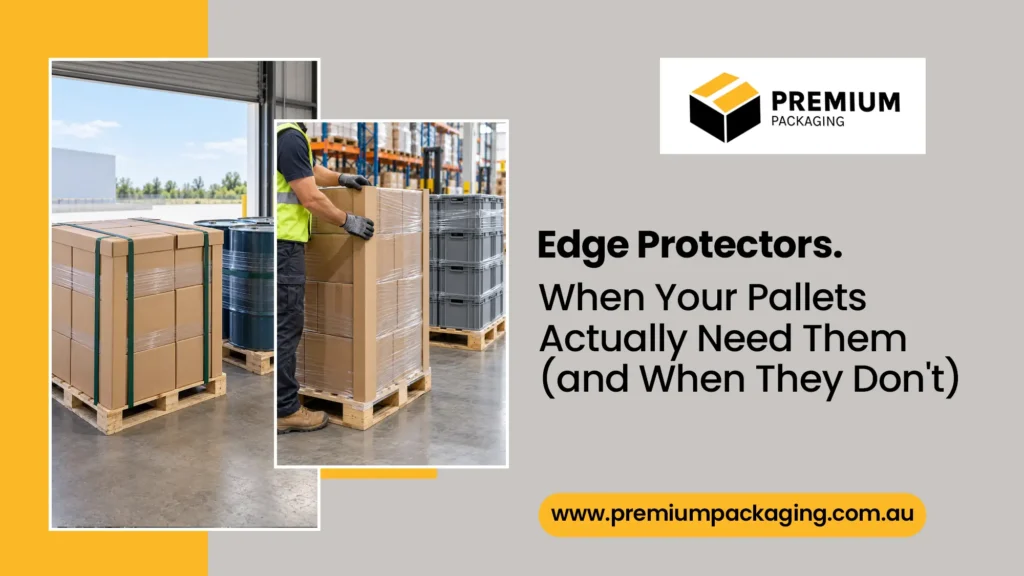
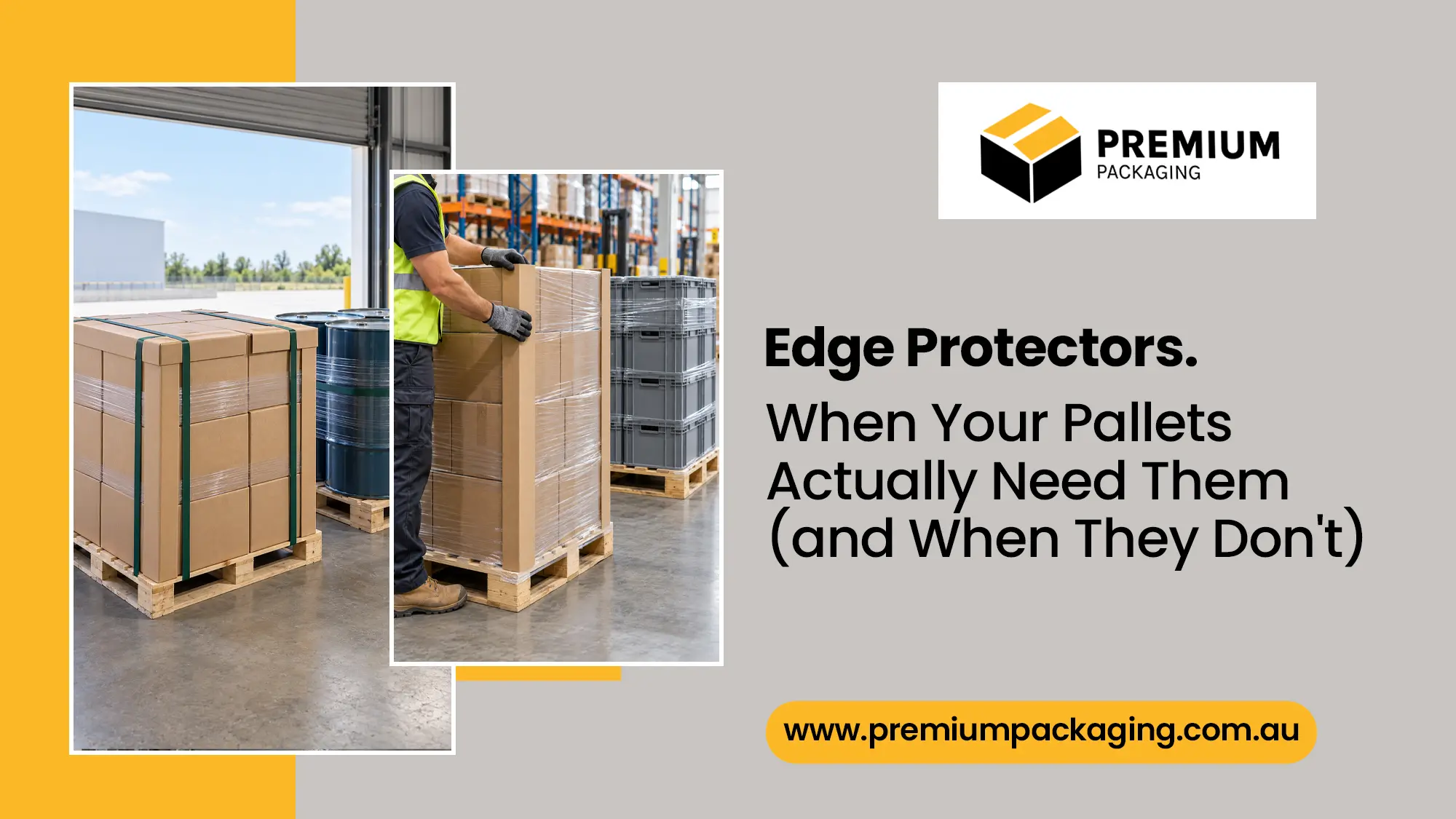
An edge protector, also called an angle board, corner protector, cornerboard or pallet corner, is a rigid right angle formed from layers of compressed kraft and recycled paper. It sits over the vertical corner of a palletised load, under the strapping and stretch film.
It does two jobs at once, and the second is the one most buyers overlook. The obvious job is spreading pressure so straps and film do not bite into carton corners. The less obvious job is structural: fitted on all four corners, the boards act as vertical posts that carry some of the stack load, stiffen the whole unit and resist the load leaning or collapsing. That structural effect is why they let you pull strapping and film tighter than the cartons alone would tolerate, which in turn gives better containment.
When Your Pallets Genuinely Need Edge Protectors
You are strapping the load
This is the clearest case. Strapping concentrates its entire tension on four narrow corner contact points. Without a board to spread that force, the strap cuts into the top cartons, crushes the corner and often loosens as the carton gives way. Fit protectors and you can tension properly, which is the whole point of strapping in the first place.
The load is tall, or stacked light cartons
Tall loads lean. Light cartons stacked high have very little inherent column strength, so the stack relies on something to hold its shape. Corner boards act as those vertical posts and are often the difference between a stable unit and one that arrives leaning.
Cartons are the outer surface and the corners are exposed
Any load where cardboard is the outermost layer at the corners is a candidate, because corners are what forklift tines, door frames and other pallets make contact with. Vertical corners take the most hits, top edges get crushed by strapping and by whatever is stacked on top, and bottom edges cop tine damage.
The freight leg is long or multi-handled
More touchpoints means more chances for a corner to be knocked. Export freight, interstate linehaul and any load transferring between depots justify protection that a single short run would not.
The goods are high value or presentation matters
For retail-ready stock, a crushed corner can make a carton unsellable even when the contents are perfectly fine. Where the outer carton is part of what the customer receives, protecting it is protecting the sale.
When You Probably Do Not Need Them
Being honest about this matters, because fitting them to every pallet is simply a habit that costs money without reducing damage.
Rigid, self-supporting loads: drums, steel, machinery and other goods that cannot be crushed by a strap gain nothing from a cardboard board.
A single heavy item on a pallet: if the load is one solid unit rather than a stack, there is no stack to stabilise.
Short internal transfers: moving a pallet across your own warehouse is not the same risk profile as sending it interstate.
Low, dense, stable loads: a short stack of heavy cartons that is wrapped but not strapped is usually fine on film alone.
Loads already in a protective outer: where goods sit inside a crate or rigid container, the corner is already protected.
The test is simple. If nothing on the corner of that pallet can be crushed, deformed or scuffed, a corner protector is not doing anything.
Quick Decision Guide
Your load
Edge protectors?
Why
Strapped cartons
Yes
Spreads strap tension so corners are not crushed
Tall or light carton stack
Yes
Acts as vertical posts and holds the stack square
Export or long-haul freight
Yes
More handling touchpoints and corner impacts
Retail-ready presentation cartons
Yes
A crushed corner can make the carton unsellable
Drums, steel, machinery
No
Load cannot be crushed, so there is nothing to protect
Single heavy item per pallet
No
No stack to stabilise
Short internal warehouse transfer
Usually not
Low handling risk over a short distance
Choosing the Right Length and Profile
Once you have decided a load needs them, the specification is straightforward. Corner protectors are supplied in packs of 25 across four stocked sizes, all in 4mm board: 60mm x 60mm x 400mm, 60mm x 60mm x 580mm, 50mm x 50mm x 1165mm and 60mm x 60mm x 1600mm.
Match the length to the load height
For full-height corner protection and maximum stack stiffening, choose a board close to your typical load height. The 1165mm and 1600mm lengths suit standard and tall palletised loads. Shorter 400mm and 580mm boards suit targeted protection, such as the top edge under a strap, or reinforcing a particular layer rather than the full column.
Match the wing width to the carton
Wing width is the measurement of each leg of the right angle, 50mm or 60mm here. A wider wing spreads force over more carton surface, which helps on softer cartons and under higher strapping tension. A narrower wing is fine where the board is mainly protecting against knocks rather than carrying strap pressure.
A note on board thickness
All stocked profiles are 4mm board, which is a heavy duty specification suited to commercial palletising rather than light interior packing. For most warehouse and freight applications this is the thickness you want, since thinner boards buckle under real strapping tension.
Fitting Them Properly
A board that is fitted badly protects nothing. Seat each protector flush against the vertical corner, running the full height you intend to protect, before you strap or wrap. Hold them in place with the first turns of film so they do not shift as you work around the load. Where you are strapping, make sure the strap runs across the face of the board rather than at its edge, so the force is spread across the wings as designed.
Edge protectors work with your other load securing products, not instead of them. They let pallet wrap and stretch film be applied at useful tension without the film cutting corners, and for weather or dust protection a kraft pallet top sheet over the top edge pairs well with corner boards on the verticals.
Can They Be Used Inside Cartons Too?
Yes, and it is an underused application. The same boards fitted as internal corner posts inside a large carton take vertical load off the box walls, which improves stacking strength and resists the carton bulging. Operations shipping heavy goods in large cartons often find this solves a crushing problem that heavier board alone did not.
Sustainability
Cardboard edge protectors are made from layered kraft and recycled paper, so they go into the same recycling stream as your cartons rather than needing separate disposal. They can also be reused across several loads before recycling if they are removed carefully. Where a load genuinely needs protection, a recyclable paper board is a straightforward specification to defend in a packaging review, and avoiding damaged goods prevents the far larger waste of a replaced consignment.
Order Edge Protectors From Premium Packaging
Premium Packaging supplies cardboard corner and edge protectors to Australian businesses in wholesale quantities, in the lengths and wing widths that commercial palletising actually calls for. If you are not certain which loads in your operation warrant them, our team can work through your freight profile with you rather than recommending them across the board.
They sit within our wider cardboard packaging range, so most customers add them to an existing carton or pallet consumables order. Stock is held at Werrington in Western Sydney and dispatched nationwide. For more on securing palletised freight, see our pallet packaging tips and the Premium Packaging blog.
Frequently Asked Questions
What are edge protectors used for on a pallet?
They sit over the vertical corners of a palletised load to spread strapping and film tension, so straps do not crush carton corners. Fitted on all four corners they also act as posts that stiffen the stack.
Do I need edge protectors on every pallet?
No. They earn their place on strapped loads, tall or light carton stacks, long freight legs and presentation cartons. Rigid loads such as drums, steel or machinery gain nothing, because nothing on the corner can be crushed.
What length edge protector should I order?
Match the length to the load height you want to protect. Longer boards around 1165mm and 1600mm suit full-height pallet loads, while 400mm and 580mm suit targeted protection such as a top edge under a strap.
Do edge protectors actually make a load more stable?
Yes. On all four corners they work as vertical posts that carry some stack load and hold the unit square, which also lets you apply strapping and film at a higher, more effective tension.
Are cardboard edge protectors recyclable?
Yes. They are made from layered kraft and recycled paper, so they go into the same recycling stream as your cartons. They can often be reused across several loads before being recycled.