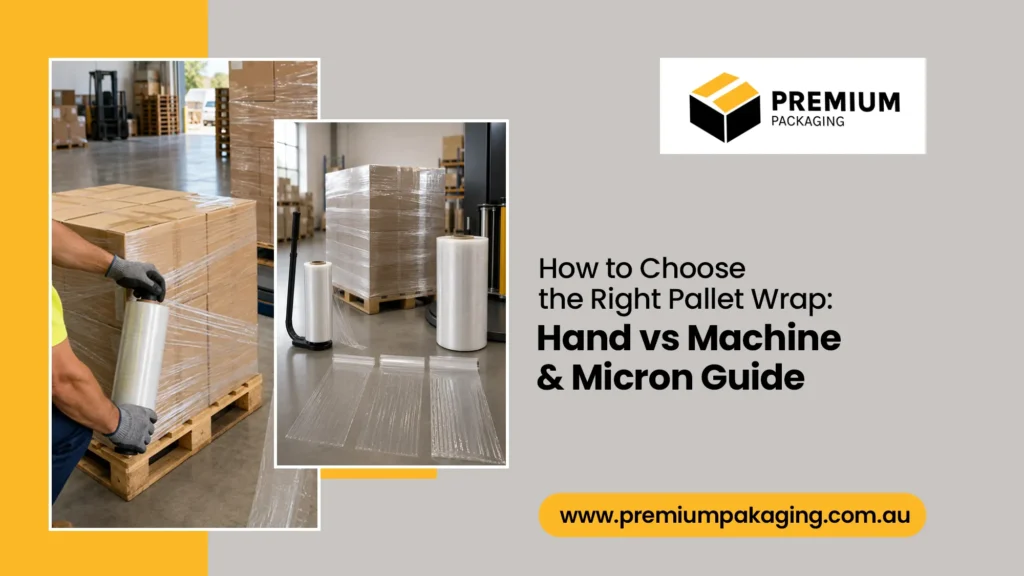
How to Choose the Right Pallet Wrap: Hand vs Machine and Micron Guide
Every palletised load that leaves your dock is a promise that the goods will arrive stacked the way they left, undamaged and intact. Pallet wrap is what keeps that promise. Yet many operations keep ordering the same film they have always used without checking whether it still suits their loads, their volumes or their equipment. Choosing correctly affects load stability, labour time, product damage rates and how much film your team gets through each month.
This guide covers the two decisions that matter most when specifying stretch film for a commercial dispatch operation: hand wrap versus machine wrap, and which micron rating suits your loads. It is written for warehouse supervisors, procurement teams and dispatch managers who need their pallets to hold from the wrapping bay to the receiving dock.
What Pallet Wrap Does in a Commercial Dispatch Operation
Pallet wrap, also called stretch film or stretch wrap, is a thin polyethylene film applied under tension around a palletised load. As the film stretches and recovers, it grips the cartons together and anchors them to the pallet, holding the stack steady through forklift handling, linehaul vibration and multiple freight touchpoints.
Beyond containment, a well-specified wrap keeps dust, moisture and handling marks off the goods, presents a tidy load to carriers and customers, and forms part of your load restraint obligations for road transport. The right film does all of this in as few revolutions as possible, which keeps both labour time and film consumption in check.
Hand Pallet Wrap vs Machine Pallet Wrap
The first decision is how the film will be applied. The answer usually comes down to how many pallets you wrap in a day and how consistent those loads are.
When Hand Pallet Wrap Is the Right Choice
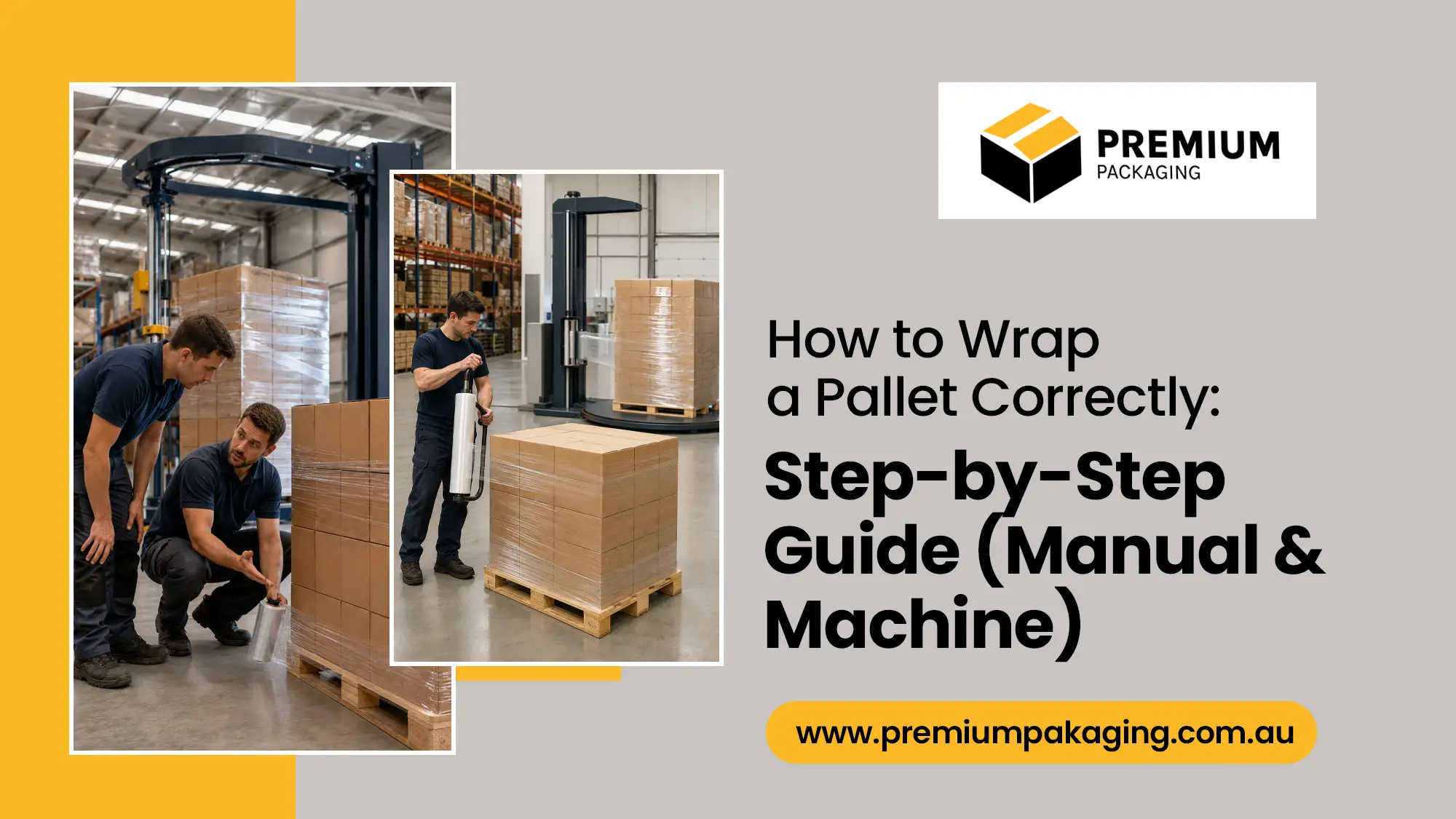
Hand pallet wrap comes on shorter, lighter rolls designed to be applied manually, generally with a dispenser for tension and control. It suits operations wrapping lower daily volumes, businesses working across several sites, and any workflow with mixed or odd-sized loads that an automated wrapper would struggle to handle.
Hand wrap gives operators direct control over where the film goes, which is useful for irregular stacks, part pallets and dock side rewraps. Premium Packaging supplies hand film in two constructions, cast hand pallet wrap for smooth, quiet application and blown hand pallet wrap for tougher loads with sharp corners, so the roll matches the loads your team handles.
When Machine Pallet Wrap Is the Right Choice
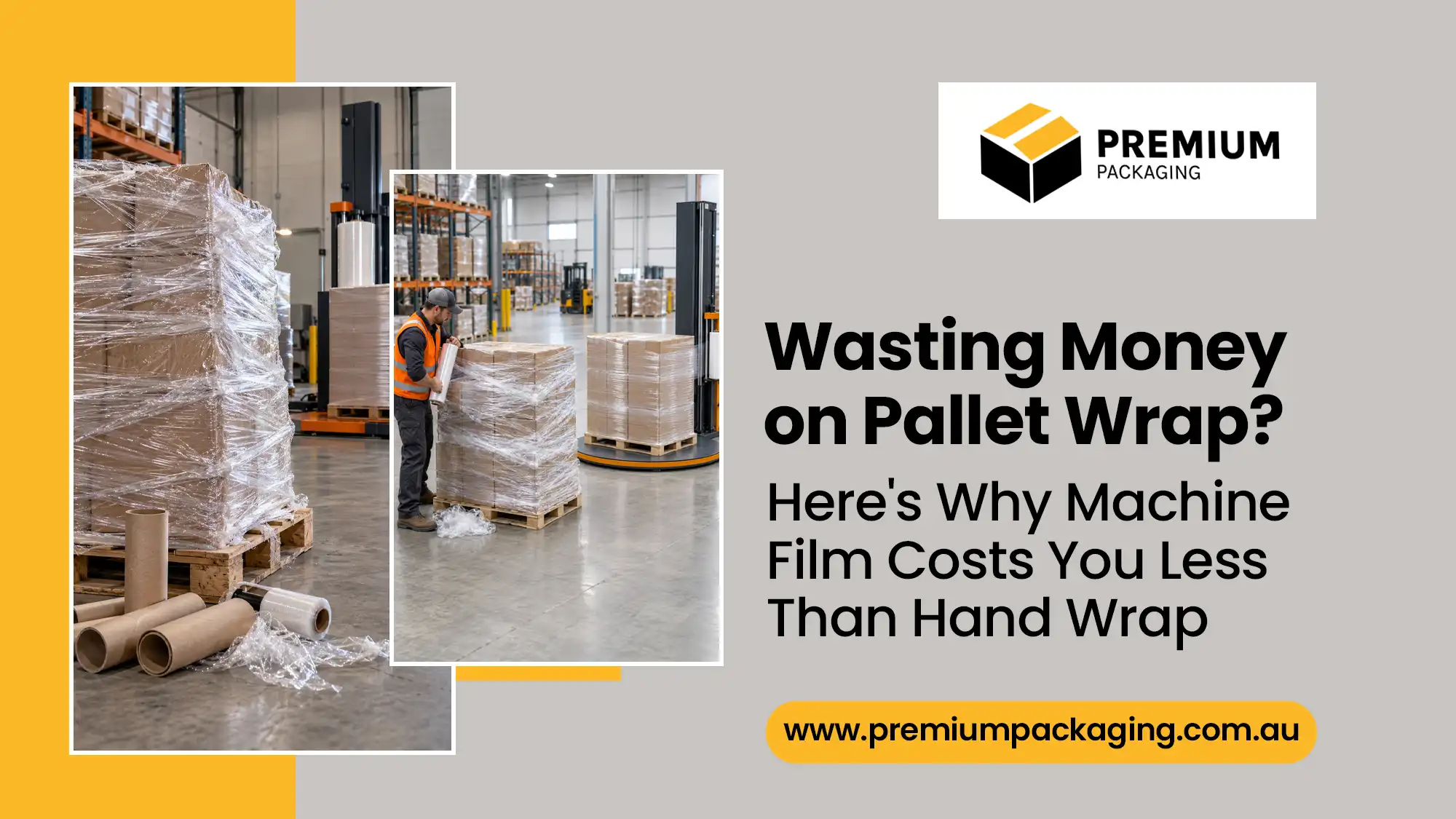
Machine pallet wrap is wound on long rolls for semi-automated and fully automated wrapping machines. Once daily volumes climb, a machine applies film faster and with the same tension and overlap on every pallet, regardless of who is on shift. That consistency is hard to match by hand, and it directly reduces load failures caused by under-wrapping.
As a rough guide, operations wrapping more than 15 to 20 pallets a day usually gain from moving to a machine and clear machine pallet wrap. Machine film also reduces repetitive manual handling for warehouse staff, which matters for both throughput and workplace safety.
Quick Decision Guide
Factor
Hand pallet wrap
Machine pallet wrap
Daily pallet volume
Lower volumes, up to roughly 15 to 20 pallets
Higher volumes, 15 to 20 pallets and above
Load consistency
Handles mixed and odd-sized loads well
Best for uniform, repeatable loads
Tension consistency
Varies with the operator
Consistent on every pallet
Upfront equipment
None beyond a dispenser
Requires a wrapping machine
Labour
More manual handling per pallet
Less handling, faster cycles
Best suited to
Small to medium, multi-site, overflow
Warehouses and distribution centres with steady throughput
Many growing operations run both: machine rolls on the main line and hand rolls for overflow, part pallets and rewraps.
Understanding Micron: What Film Thickness Means for Your Loads
Micron, shown as um, is the measure of film thickness. One micron is one thousandth of a millimetre, and the higher the number, the thicker and stronger the film. A 30um film is heavier and more puncture resistant than a 20um film, but thickness is not a case of more always being better. Over specifying wastes film on light loads, while under specifying risks film breaks and load collapse on heavy ones. The goal is to match the micron to the weight, shape and edge profile of what you are wrapping.
Micron Guide by Load Type
Typical micron
Load profile
Common applications
15 to 20um
Light, stable, smooth-sided loads
Cartons of lightweight goods, retail cartons, stable boxed stock
20 to 25um
Standard commercial loads
General warehouse pallets, mixed cartons, everyday dispatch
25 to 30um
Heavier or denser loads
Dense goods, taller stacks, loads that shift in transit
These ranges are a starting point rather than a fixed rule. Film performance also depends on construction and how well it is applied, which is where cast versus blown film comes in.
Cast vs Blown Film: A Second Decision That Matters
Two films of the same micron can perform very differently depending on how they are made.
Cast film is produced by rapidly cooling the polymer on chilled rollers. It comes off the roll quietly, has good clarity and stretches smoothly, which makes it comfortable for hand wrapping and easy to read labels through. It is a sound choice for standard cartons and general dispatch.
Blown film is cooled with air as it is extruded, giving it a hazier look but higher puncture resistance, better tear strength and stronger load-holding memory. It is louder on release, but it holds heavy, dense and sharp cornered loads that would tear a cast film of the same thickness. For demanding freight, a blown film often outperforms a thicker cast one.
Matching Film Colour to the Job
Colour is not just cosmetic in a commercial setting. Clear film suits loads that need to be scanned or identified through the wrap. Black film conceals contents to deter tampering of high-value goods but absorbs heat, so it is not suited to temperature-sensitive freight. White pallet wrap conceals contents while reflecting heat, making it the usual pick for heat-sensitive stock, outdoor storage and colour-coded freight streams. Choosing the colour with the freight profile in mind avoids paying for a feature the load does not need.
Pre-Stretch: Getting More From Every Roll
Stretch film is designed to be elongated as it is applied. Machine systems can pre-stretch film well beyond what is possible by hand, extending each roll further and using less film per pallet while still holding the load. Hand wrapping achieves lower stretch, which is one more reason higher volume operations benefit from machine application. Whichever method you use, applying the film with adequate and consistent tension is what turns a roll into secure loads rather than wasted plastic.
Sustainability: Using Less Film Without Losing Load Stability
The most direct way to reduce plastic use is to specify correctly. A film matched to the load secures a pallet in fewer revolutions than a lighter film stretched past its limit, which lowers total film consumption per load. Reviewing your wrap pattern and film weight often reveals that loads are being over-wrapped out of habit.
Used stretch film is low-density polyethylene and can enter commercial soft plastic recycling streams rather than going to landfill. For businesses reviewing their packaging footprint, matching film specification to actual load requirements is a practical, verifiable step that reduces waste without putting load stability at risk.
Compliance and Load Restraint
Under Australia’s Chain of Responsibility provisions in the Heavy Vehicle National Law, every party in the supply chain shares legal accountability for loads being properly restrained for road transport, and that includes the businesses that pack and wrap them. A correctly wrapped pallet, with the right film, adequate layers, proper anchoring to the pallet and full containment, forms part of meeting that duty. Specifying a film with dependable containment strength and applying it consistently is a sensible part of compliant dispatch.
How Premium Packaging Supports Your Wrapping Operation
Premium Packaging is a Sydney-based wholesale supplier stocking a full pallet wrap and stretch film range in hand and machine grades, cast and blown constructions, and clear, black and white films. Our specialists match film type, thickness and roll format to your loads, wrapping equipment and freight lanes, rather than handing over a generic spec sheet.
Stock is held at our Werrington warehouse with delivery across Sydney, Melbourne, Brisbane, Adelaide, Perth and regional Australia, and recurring supply arrangements keep your wrapping lines stocked as volumes grow. For loads that also need edge protection or bracing, our strapping range works alongside stretch film to keep freight secure.
Frequently Asked Questions
What is the difference between hand and machine pallet wrap?
Hand pallet wrap comes on lighter rolls applied manually, suited to lower volumes and mixed loads. Machine pallet wrap is wound for automated wrappers that apply consistent tension on every pallet, making it the efficient option for higher volume lines.
What micron pallet wrap do I need?
It depends on your load. Light, stable loads are generally fine around 15 to 20um, standard commercial loads suit 20 to 25um, and heavy, dense or sharp-edged loads call for 25 to 30um or higher. Matching micron to the load avoids both film waste and film breaks.
Is a higher micron always better?
No. A thicker film adds weight and uses more material without benefit on light, stable loads. The aim is to match thickness to load weight, shape and edge profile, sometimes choosing a tougher blown film over simply increasing micron.
What is the difference between cast and blown pallet wrap?
Cast film is clear, quiet on release and stretches smoothly, which suits hand wrapping and general cartons. Blown film has higher puncture and tear resistance for heavy or sharp loads, holding them securely where a cast film of the same thickness might tear.
When should a business switch from hand to machine wrapping?
Once you are wrapping more than roughly 15 to 20 pallets a day, a machine usually pays off through faster cycles, consistent tension and reduced manual handling. Many operations keep hand rolls on hand for overflow and odd-sized loads.