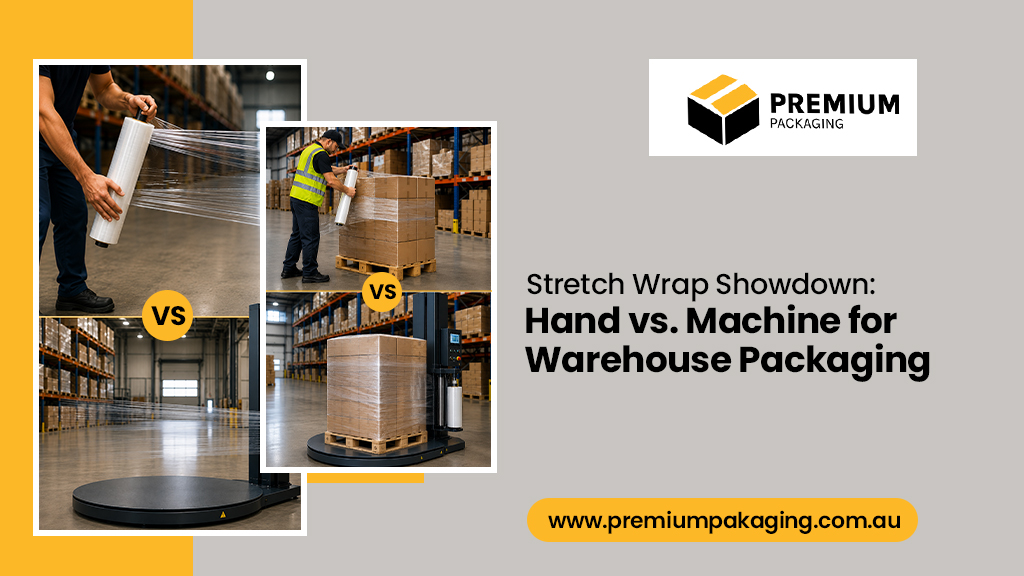
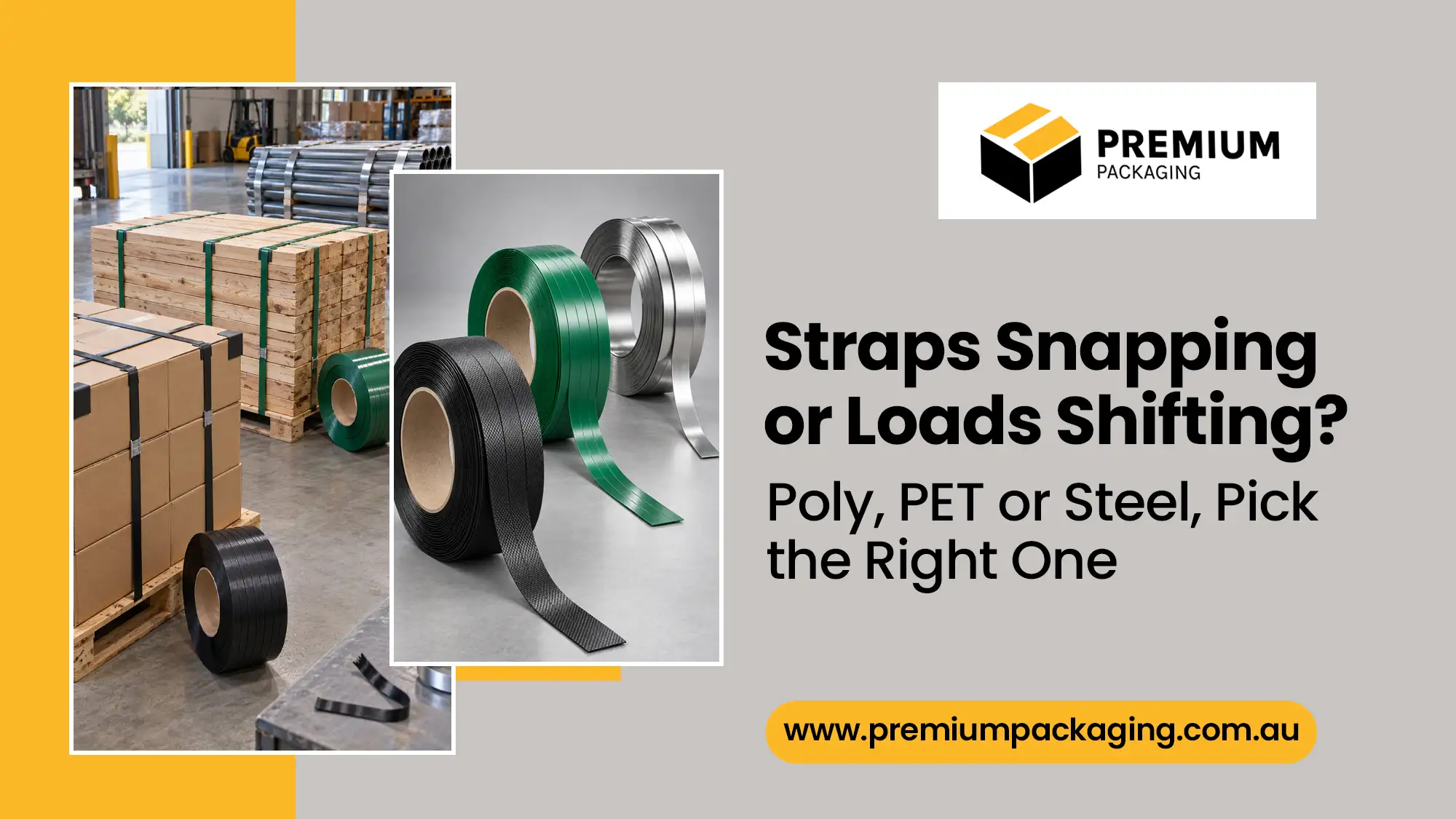
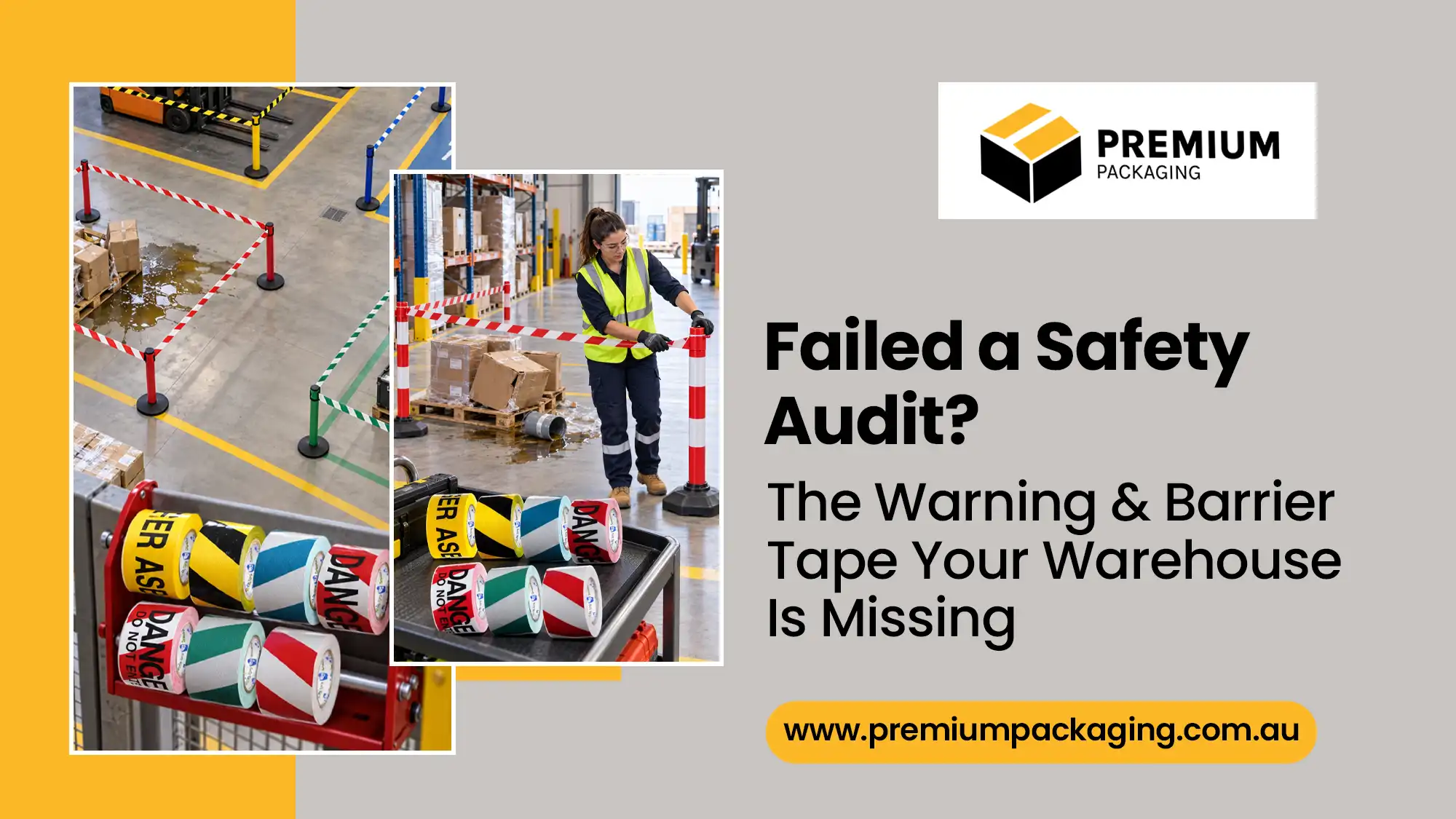
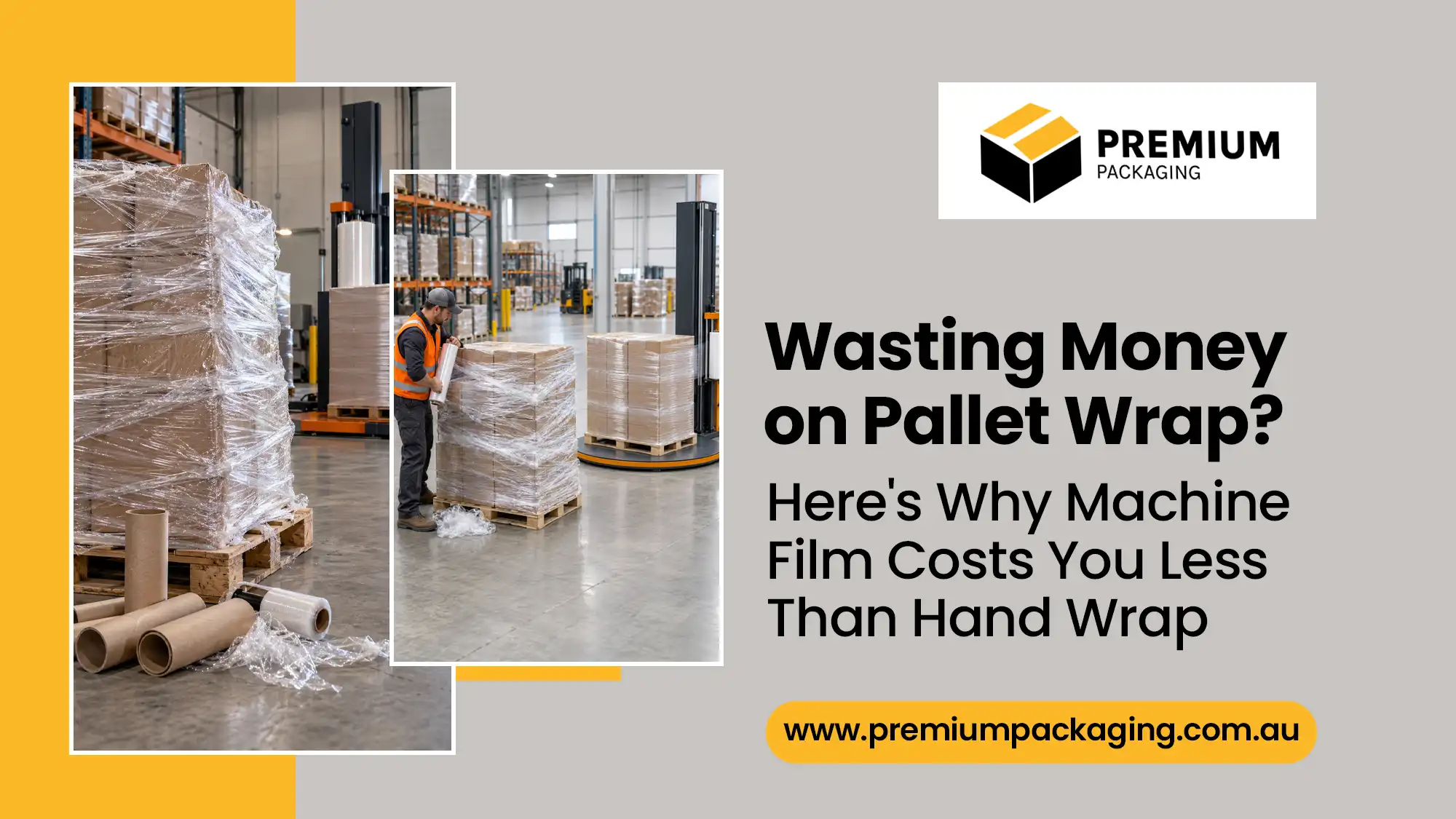
Stretch Wrap Showdown: Hand vs. Machine for Warehouse Packaging
Every warehouse manager wrapping pallets reaches the same crossroads at some point: is manual hand wrapping still the right call, or has the operation grown to the point where machine stretch wrap makes more sense? It is a practical question, and the answer depends on more than just how many pallets move through the dock each day.
Both methods use stretch film to secure pallet loads for storage and transport. Both protect goods from movement, dust, and moisture. But they perform very differently in terms of film consumption, labour time, wrapping consistency, and workplace health and safety outcomes.
This guide covers a full comparison of film types, operational fit, WHS considerations, and scenario-specific decision-making, so you can match the right method and film to your warehouse from day one.
What Is Stretch Wrap and Why Does the Application Method Matter?
Stretch wrap, also called pallet wrap, is a linear low-density polyethylene film applied to pallet loads under tension. As the film stretches and recovers, it creates a tight, stable containment layer that holds boxes, cartons, and goods together during freight and storage.
The way stretch film is applied directly affects how much film is consumed per pallet, how consistent the containment is across your team and shifts, how long each pallet takes to wrap, and the physical demands placed on your warehouse staff. Choosing the right application method is therefore as much an operational decision as a product choice.
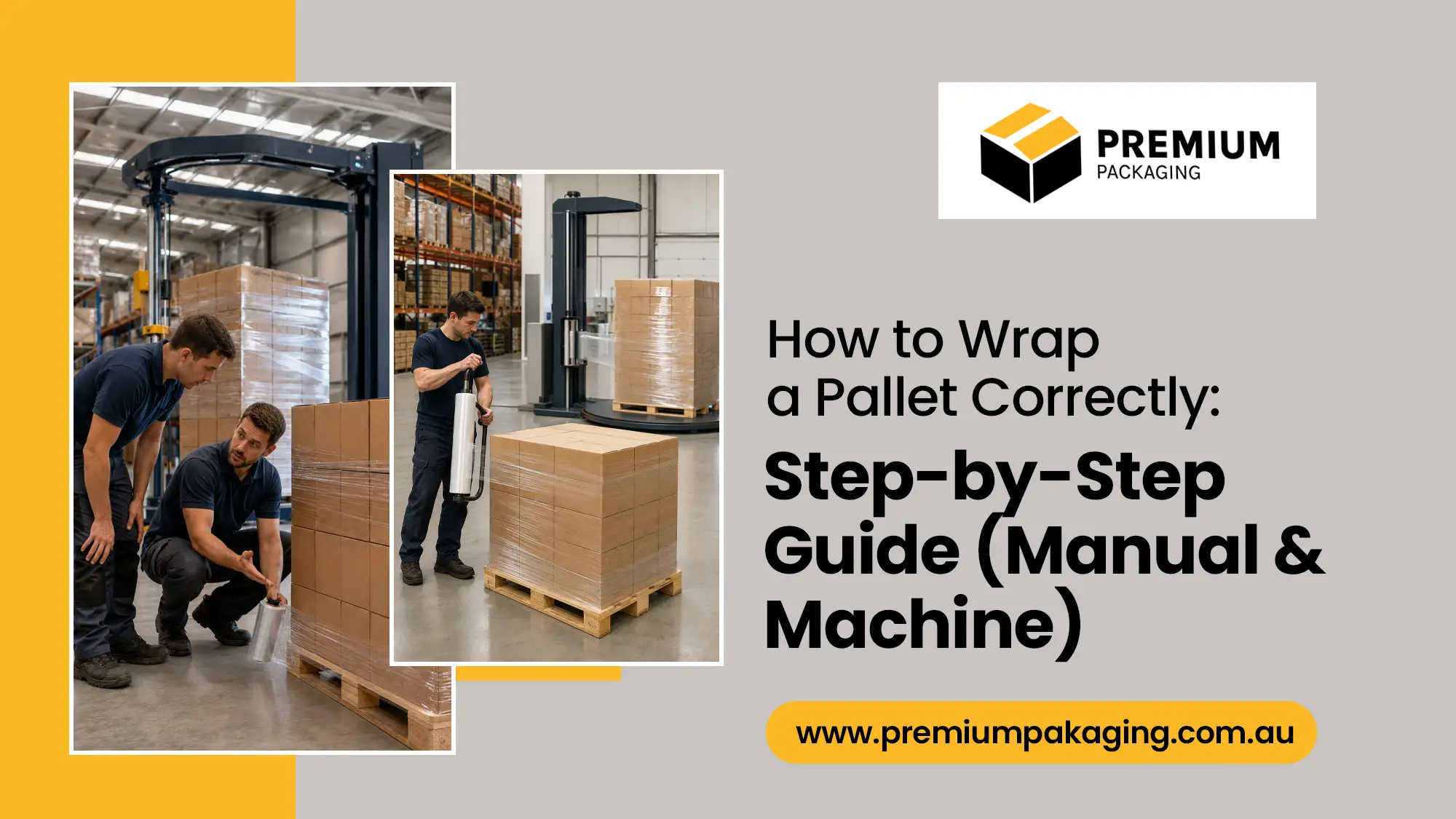
Hand stretch wrap is applied manually by an operator walking around the pallet while unwinding the roll under tension. The operator controls how much stretch the film receives by the pace and pressure they apply during the walk. Most hand-wrapping operations use a core dispenser or handle grip to reduce wrist and hand strain during extended use.
Hand pallet wrap rolls are shorter and lighter by design, making them manageable for operators working through multiple pallets without a machine. Film thicknesses for hand wrap typically range from 17 to 25 microns for standard warehouse loads, with heavier gauges available for difficult loads.
Cast vs Blown: The Two Hand Wrap Film Types
Hand Pallet Wrap Cast: Cast film is produced by extruding molten resin through a flat die onto a chilled roller. The result is a film with excellent optical clarity, quiet unwinding, and consistent thickness across the roll. Cast hand wrap is the standard choice for most warehouse operations running general cargo pallets.
Hand Pallet Wrap Blown: Blown film is produced by inflating molten resin into a bubble and air-cooling it as it rises. This process produces a film with higher puncture resistance and stronger load-holding force per gauge than cast film. Blown hand wrap is the right choice for pallets with sharp edges, irregular shapes, or heavier loads where cast film may tear under the tension required for secure containment.
Your operation wraps fewer than 15 pallets per day on average
Pallet sizes and shapes vary between loads and suit a flexible wrapping approach
Wrapping happens across multiple areas of the facility rather than at a fixed station
The capital budget does not yet support the wrapping machinery investment
Your dispatch area is compact and cannot accommodate a turntable machine setup
Machine Stretch Wrap: What It Is and Where It Excels
Machine stretch wrap is applied using a pallet wrapping machine, which rotates the film carriage around the load via a turntable or a rotary arm. The machine pre-stretches the film before it reaches the load, and that pre-stretching is the factor that drives the significant efficiency differences between hand and machine methods.
Pre-stretch ratios on wrapping machines typically range from 150% to 250%, meaning the film extends to between one-and-a-half and two-and-a-half times its original length before being applied. This substantially reduces the amount of film consumed per pallet compared to hand application, where the stretch rate depends entirely on the operator.
Your operation wraps 15 or more pallets per day on a consistent basis
Pallet loads are relatively uniform in size and shape
Reducing labour time in the dispatch area is an operational priority
Improving wrapping consistency across shifts matters for freight compliance and damage reduction
You are managing WHS risks associated with extended manual wrapping tasks
Film waste reduction forms part of your business sustainability commitments
Head-to-Head Comparison: Hand vs. Machine Stretch Wrap
Factor
Hand Stretch Wrap
Machine Stretch Wrap
Initial Outlay
Film rolls + optional dispenser
Wrapping machine + film rolls
Film Per Pallet
Higher (variable manual application)
Lower (pre-stretch reduces usage)
Wrapping Speed
Slower; depends on operator pace
Faster, consistently timed cycles
Application Consistency
Varies between operators and shifts
Uniform tension and overlap every time
WHS Risk Profile
Repetitive bending, walking, and rotation
Reduced; the operator supervises the cycle
Flexibility for Odd Loads
High; wrap anywhere on the floor
Limited for very irregular shapes
Best Daily Volume
Fewer than 15 pallets per day
15 or more pallets per day
Coloured Film Options
Cast, blown, black, and white available
Black and white machine grades available
Capital Required
Low
Moderate to high
Pre-stretch settings on wrapping machines extend film significantly further before it is applied, reducing consumption per pallet compared to hand application. For high-volume operations, this difference in film use per pallet adds up quickly across a full working week.
WHS Considerations for Australian Warehouse Operations
Workplace health and safety is a genuine operational factor in the hand-versus-machine decision. Manual pallet wrapping involves repetitive bending, walking in circles around a load while holding tension, and frequent back and shoulder rotation. Over long shifts or at high volume, these movements place physical strain on warehouse staff.
Safe Work Australia guidelines on manual tasks and repetitive motion injuries apply directly to wrapping operations. Where high pallet volumes require sustained periods of hand wrapping, the WHS risk profile of the task should be formally assessed as part of your manual handling obligations.
Machine wrapping shifts the operator’s role from physically wrapping the pallet to loading it, initiating the wrap cycle, and monitoring the output. This does not eliminate all manual handling from the task, but it substantially reduces the repetitive-motion component that carries the highest cumulative injury risk over a working week.
For operations that run sustained wrapping periods across shifts, the transition to machine wrapping can reduce the risk of repetitive motion injuries and associated WHS costs. This is a cost and risk factor worth weighing alongside film consumption when calculating the total cost of each method.
Coloured Wrap, Black Wrap, and Bundling Film: Operational Applications
Black Hand and Machine Pallet Wrap
Black stretch film completely conceals the contents of a wrapped pallet. This is useful where load confidentiality is required in transit, in multi-client warehouse environments, or for high-value goods moving through shared freight networks. Black film also blocks UV light from reaching goods sensitive to light during outdoor staging.
White pallet wrap is used where high visibility of the wrapped load matters, such as cold storage environments, food service distribution, or retail receiving areas. It is also a practical choice for load identification in multi-SKU warehouse settings where distinguishing pallet types by colour reduces handling errors.
Bundling film is a narrower, lighter stretch film used to group individual items, boxes, or products together without full pallet containment. It is suited to securing product bundles on conveyor lines, grouping multipacks for retail display, or holding box stacks together for short-distance movement within a warehouse. Bundling film is applied by hand and requires no machinery.
Can You Use Both Hand and Machine Wrap in the Same Operation?
Yes, and many mid- to large Australian warehouses operate exactly this way. A typical hybrid approach uses a machine wrapping system for the main dispatch area where the bulk of daily pallets are processed, while maintaining hand wrap rolls for:
Wrapping in remote or overflow areas of the facility away from the machine location
Handling odd-sized, very tall, or exceptionally irregular loads the machine cannot accommodate
Topping up individual wraps where a section has been disturbed after initial wrapping
Re-securing incoming goods in receiving areas when arrived loads need stabilising
Off-site or field applications where a wrapping machine is not available
Premium Packaging supplies both hand and machine wrap in compatible gauges and colours, so maintaining consistent film performance across both methods within the same operation is straightforward.
Decision Framework: Choosing the Right Method for Your Warehouse
Choose Hand Wrap If…
Choose Machine Wrap If…
You wrap fewer than 15 pallets per day
You wrap 15 or more pallets per day
Pallet sizes and shapes vary between loads
Your loads are consistent in size and shape
You need flexibility across multiple facility areas
You have a fixed dispatch or packing area
Upfront capital is the primary constraint
Reducing film cost and labour time is a priority
Operations are seasonal or lower volume
Consistent WHS outcomes across shifts matter
No fixed wrapping station is available
Sustainability targets include film waste reduction
The decision does not need to be permanent. Many operations start with hand wrap and transition to machine wrapping as throughput grows. The key is selecting film specifications that perform reliably at your current volume and can scale without disruption as your operation develops.
Building a Complete Pallet Security System
Poly Strapping: Applied over the wrapped pallet to add a second containment layer on heavy or unstable loads. Strapping prevents lateral spread and reinforces long-haul or export freight.
Pallet Top Sheet: A flat film sheet placed over the top of the pallet load before wrapping, protecting the top layer from moisture and dust without requiring full pallet bag coverage.
Pallet Bags: Full-pallet bag covers provide a complete enclosure around the load before strapping or wrapping. Suited to goods requiring dust or moisture exclusion across the entire pallet surface.
Corner Protectors: Fitted to pallet load corners before wrapping to prevent edge compression from strapping and maintain load integrity under stacked freight.
What is the difference between cast and blown stretch wrap?
Cast film is made through a flat-die extrusion process, producing a clear, consistently thick film that unwinds quietly. Blown film is made by inflating molten resin into a bubble as it cools, resulting in a film with higher puncture resistance and load-holding strength per gauge. Cast film suits most general warehouse loads. Blown film is the better choice for pallets with sharp-edged contents, heavy loads, or irregular shapes where film integrity under tension is the priority.
How many pallets per day is the threshold for considering machine wrapping?
A commonly used practical threshold is around 15 pallets per day. Below that volume, hand wrap is generally more cost-effective once capital outlay, labour time, and film usage are considered together. Above 15 pallets per day on a consistent basis, the time savings and reduction in film consumption from machine wrapping typically justify the machinery investment over time. Your actual threshold depends on your labour rates, film cost, and load characteristics.
Can machine stretch film rolls be used for hand wrapping?
No. Machine film rolls are heavier and wider than hand rolls, and the film formulation is designed to stretch under the high tension of a machine pre-stretch carriage. Using machine film manually produces much lower stretch rates, results in more film waste per pallet, and gives inconsistent containment. Hand film and machine film are separate products formulated for their respective application methods and should not be interchanged.
What film is best for pallets with sharp edges or protruding items?
Blown stretch film, in either hand or machine format, offers higher puncture resistance than cast film and is better suited to loads with sharp corners, metal components, strapping edges, or other protruding features that could pierce standard film under tension. Higher-gauge film in either cast or blown format also improves puncture resistance for demanding loads.
Does black pallet wrap perform the same as clear wrap?
Yes. The colouring agent used to produce black pallet wrap does not reduce film strength, elasticity, or stretch performance. Black wrap is selected for load confidentiality in transit, UV protection, or load identification in multi-SKU facilities, and it performs comparably to clear film of the same gauge. Premium Packaging supplies black pallet wrap in both hand and machine formats.