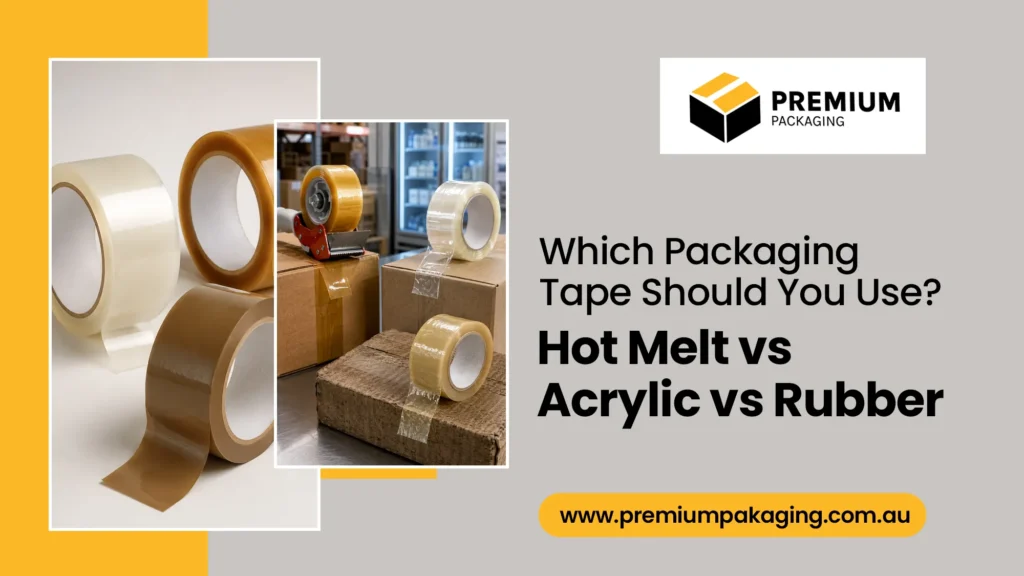
Which packaging tape should you use? hot melt vs acrylic vs rubber
A carton is only as secure as its seal. When tape lifts at the flaps or lets go in transit, the result is damaged goods, re-taping on the dock and returns that eat into margin. The frustrating part is that a failed seal is rarely a quality problem. It is almost always the wrong adhesive for the job. Packaging tape comes in three main adhesive types: hot melt, acrylic and rubber, and each is built for different conditions.
This guide explains how the three adhesives behave, where each performs and where each struggles, so you can match the tape to your cartons, your environment and your packing line. It is written for procurement teams, warehouse supervisors and dispatch managers who want seals that hold the first time. For a broader look at every tape category, see our guide to packaging tape types and uses.
It is the adhesive that decides, not the backing
Most carton sealing tape shares the same backing, a thin BOPP polypropylene film measured in microns. What separates one roll from another is the adhesive coated onto that film. All three types are pressure sensitive, meaning they bond when pressure is applied rather than needing heat or water, but they cling, hold and age very differently. Understanding those differences is the whole decision.
Hot melt adhesive tape
Hot melt tape uses a synthetic rubber and resin adhesive. It combines a high initial tack with strong holding power, so it grabs quickly and stays put, which is why it is the workhorse of high-speed carton sealing.
Hot melt bonds well to recycled and rough corrugated, the kind of cartons most businesses now ship in, and its high shear strength resists the pull of heavy or overfilled boxes. It unwinds smoothly and consistently, which matters on automatic case sealing machines. Its main limitation is at the extremes, as prolonged exposure to high heat or strong UV can soften the bond over long periods, so it is at its best for general shipping and medium-term storage rather than long outdoor exposure.
Best for: general carton sealing, high-speed and machine application, recycled cardboard, and heavier or overfilled cartons.
Acrylic adhesive tape
Acrylic tape uses a water-based acrylic adhesive. It has a slower initial grab than the other two, but it makes up for it with long-term durability. Acrylic resists UV, does not yellow with age, and holds a stable bond across a wide temperature range, which makes it the choice for cartons that sit in storage for weeks or months.
Because it stays clear and does not discolour, acrylic suits presentation-sensitive cartons and retail-facing goods. It performs reliably in moderate warehouse conditions and long-term indoor storage. It is less aggressive than rubber on dusty or very rough surfaces and is not the first pick for cold rooms, so it is best matched to stable, ambient environments.
Best for: long-term storage, ecommerce and warehousing, presentation cartons, and goods stored in ambient conditions.
Rubber adhesive tape
Rubber tape uses a natural rubber adhesive and has the highest, most aggressive initial tack of the three. It bonds fast and grips surfaces the others struggle with, including dusty, uneven and cold cartons.
That aggressive tack makes rubber the specialist for demanding seals: cold storage and freezer applications, heavily recycled or dusty cardboard, tamper-evident sealing and heavy cartons that need to hold immediately. The trade-off is shelf life and stability. Rubber rolls have a shorter usable life, and the adhesive is less resistant to long-term heat and UV than acrylic, so it is chosen for its grip in tough conditions rather than for long ambient storage.
Best for: cold and freezer environments, dusty or rough surfaces, tamper-evident seals, and heavy cartons needing instant hold.
Hot melt vs acrylic vs rubber: side by side
Property
Hot melt
Acrylic
Rubber
Adhesive base
Synthetic rubber and resin
Water-based acrylic
Natural rubber
Initial tack
High
Lower, slower grab
Highest, aggressive
Holding and shear
High
Moderate to high
High
Temperature
Good in general conditions
Stable across a wide range
Strong in cold and freezer
Ageing and clarity
Clear, may soften in extreme heat or UV
Clear, UV resistant, will not yellow
Grips well, shorter shelf life
Best surfaces
Recycled and rough corrugated
Smooth cartons, ambient storage
Dusty, uneven, cold surfaces
Typical use
High-speed and machine sealing
Long-term storage
Cold storage and demanding seals
Matching the tape to Australian conditions
Local conditions decide a lot. Cartons heading into cold rooms or freezers need an adhesive that bonds at low temperature, where rubber performs best and standard acrylic can struggle. Goods stored for long periods in a warm warehouse or exposed to light suit acrylic, which holds its bond and clarity without yellowing. For everyday dispatch across changing conditions, hot melt gives a dependable balance of quick grab and holding power. Humidity and dust also matter, and both rubber and hot melt handle rougher, recycled cartons better than acrylic.
How to choose the right tape
Work from the carton and its journey. If you are sealing recycled cartons at speed on a packing line, hot melt is the sensible default. If your cartons sit in storage for weeks or need to stay clear and presentable, acrylic is the better match. If you are sealing into cold storage, onto dusty surfaces or need an aggressive instant grip, rubber earns its place. Matching the adhesive to the application is what turns taping from a recurring problem into a seal that holds.
Hand rolls, machine rolls and dispensers
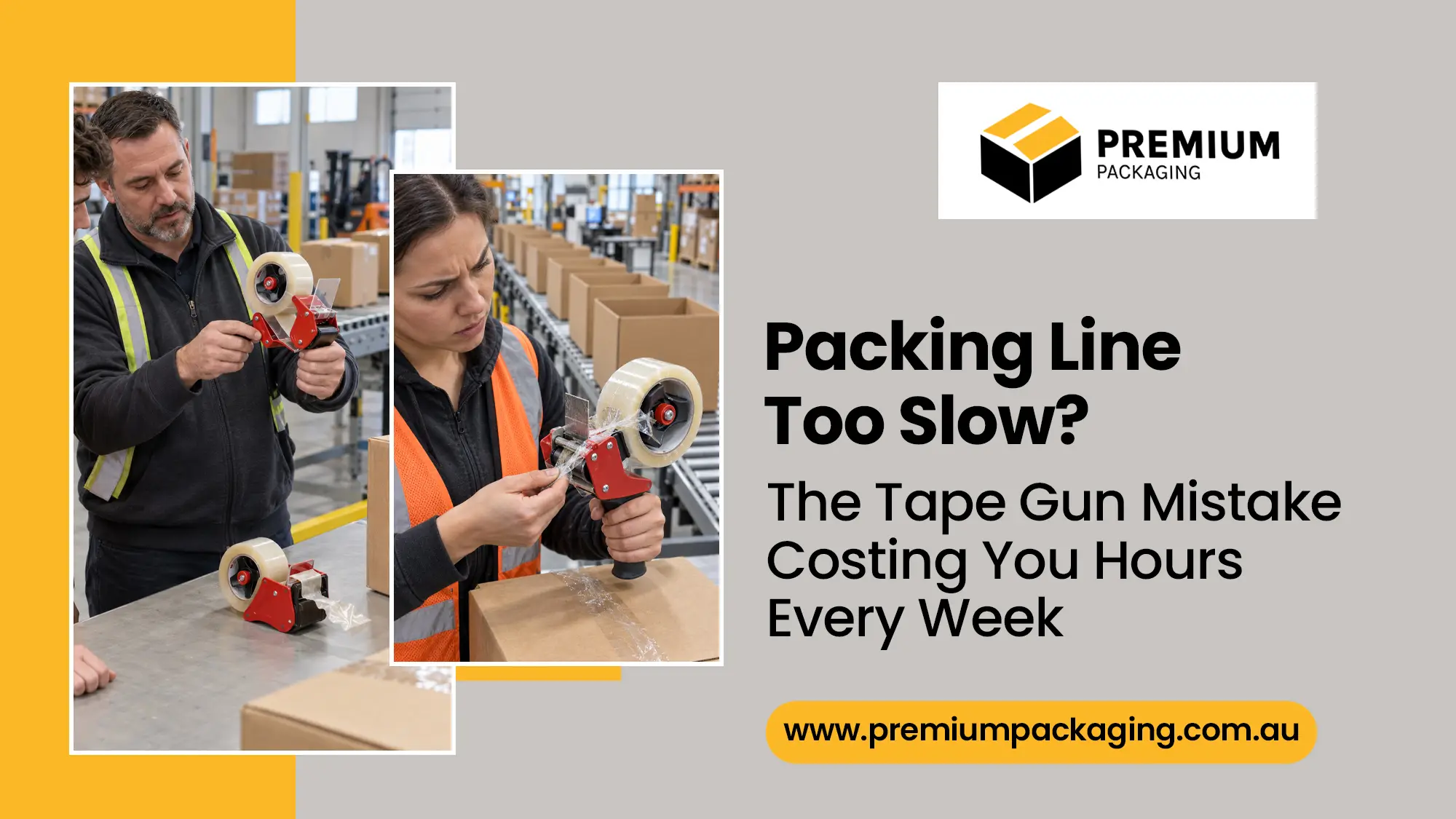
All three adhesives come in hand rolls for manual sealing and machine rolls for automatic case sealers, usually in common widths such as 48mm. The right tape dispenser makes hand sealing faster and cleaner, applying an even length and a tidy cut in a single motion, which keeps a packing bench moving and seals consistent. For high-volume lines, machine-grade rolls run on automatic sealers for speed and repeatability. Browse the full packaging tape and dispenser range to match the roll and dispenser to your workflow.
When you need more than a carton seal
Standard carton tape is not always the answer. Very heavy or long-distance cartons may need reinforced filament tape for extra tensile strength across the seal. For mounting, splicing or bonding without a visible seal, transfer tape applies a double-sided adhesive cleanly. For securing whole pallet loads, tape works alongside pallet wrap and stretch film rather than replacing it.
How Premium Packaging helps you get the seal right
Premium Packaging is a Sydney-based wholesale supplier stocking packaging tape in hot melt, acrylic and rubber adhesives, in hand and machine grades, along with the dispensers to apply them. Our specialists match the adhesive, width and roll format to your cartons, conditions and packing equipment, so the seal fits the job rather than a generic spec.
Stock is held at our Werrington warehouse with delivery across Sydney, Melbourne, Brisbane, Adelaide, Perth and regional Australia, and recurring supply keeps your packing lines sealing without interruption. Tape sits alongside custom cartons and other consumables for a complete dispatch setup, and more packaging guidance is on the Premium Packaging blog.
Frequently asked questions
What is the difference between hot melt, acrylic and rubber tape?
Hot melt uses a synthetic rubber and resin adhesive with high tack and strong holding for general sealing. Acrylic is a water-based adhesive that resists UV and stays clear for long-term storage. Rubber has the most aggressive tack, suited to cold, dusty or demanding seals.
Which packaging tape is best for cold storage or freezers?
Rubber adhesive tape is generally the best choice for cold and freezer conditions because it bonds well at low temperatures. Standard acrylic tape can struggle to grip in the cold, so applying tape before goods are chilled also helps adhesion.
Which tape works best on recycled cardboard?
Hot melt and rubber adhesives bond better to recycled and rough corrugated than acrylic, because they have a stronger initial tack. As more businesses ship in recycled cartons, hot melt is a dependable everyday choice for reliable seals.
Is acrylic or hot melt tape better for long-term storage?
Acrylic is better for long-term storage. It resists UV, holds a stable bond across a wide temperature range and does not yellow over time, while hot melt is at its best for general shipping and shorter storage periods.
Can I use the same tape on a hand dispenser and a machine?
Hand rolls and machine rolls are wound differently, so they are not interchangeable. Hot melt, acrylic and rubber are all available in both formats, and matching the roll to your dispenser or case sealer keeps sealing consistent.