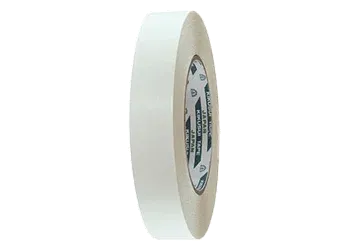
- High Strength long-life acrylic adhesive
- Excellent adhesion for most surfaces
- Rayon tissue carrier provides strength & confirmability
- UV & temperature resistance, good sheer strength
- Resistance – -10 to 120 deg. C
| CODE | DESCRIPTION | FAVOURITES | CTN QTY | 1+CTN RATE PRICE/ROLL | 2+CTN RATE PRICE/ROLL | 6+CTN RATE PRICE/ROLL | QTY | ACTION |
|---|---|---|---|---|---|---|---|---|
| DSTT0650 | Premium Double Sided Tissue Tape 6mm x 50m | 192 Roll | $4.45 | $4.20 | $3.95 |
|
|
|
| DSTT0950 | Premium Double Sided Tissue Tape 9mm x 50m | 128 Roll | $6.70 | $6.30 | $5.90 |
|
|
|
| DSTT1250 | Premium Double Sided Tissue Tape 12mm x 50m | 96 Roll | $8.90 | $8.35 | $7.85 |
|
|
|
| DSTT1850 | Premium Double Sided Tissue Tape 18mm x 50m | 64 Roll | $13.35 | $12.55 | $11.75 |
|
|
|
| DSTT2450 | Premium Double Sided Tissue Tape 24mm x 50m | 48 Roll | $17.75 | $16.70 | $15.65 |
|
|
|
| DSTT3650 | Premium Double Sided Tissue Tape 36mm x 50m | 32 Roll | $26.60 | $25.05 | $23.50 |
|
|
|
| DSTT4850 | Premium Double Sided Tissue Tape 48mm x 50m | 24 Roll | $35.45 | $45.40 | $31.60 |
|
|
Buy Double Sided Tissue Tape
Double sided tissue tape is one of the most widely used bonding tapes in commercial packaging, print finishing, and light assembly operations. It delivers clean, invisible adhesion on both surfaces without the bulk of foam tapes or the rigidity of film-based alternatives, making it the default choice for applications where a thin, conformable bond line is essential.
Premium Packaging supplies double sided tissue tape in bulk quantities for businesses across printing, packaging, retail display, signage, manufacturing, and office environments. Our tissue tapes feature an acrylic adhesive system coated on both sides of a thin non-woven tissue carrier, providing reliable adhesion to paper, cardboard, plastics, metals, and most smooth surfaces.
Available in a range of widths and roll lengths to suit both manual application and production-line workflows. Browse the range below, or contact our team for bulk pricing and specification guidance.
How Double Sided Tissue Tape Is Constructed
Understanding what goes into a roll of double sided tissue tape helps explain why it performs differently from other bonding tapes, and why it suits certain applications better than alternatives.
The tape consists of three functional layers:
Tissue carrier. The centre of the tape is a thin non-woven tissue paper substrate. This carrier gives the tape just enough dimensional stability to handle and apply cleanly, while remaining thin and conformable enough to produce an almost invisible bond line between two surfaces. The tissue carrier is what distinguishes this tape from transfer tape (which has no carrier at all) and film tape (which uses a stiffer polyester or polypropylene carrier).
Adhesive coating (both sides). Each face of the tissue carrier is coated with a pressure-sensitive adhesive. In commercial-grade tissue tapes, this is typically an acrylic adhesive system that provides consistent tack, strong shear resistance, and excellent aging properties. The adhesive activates under finger pressure alone, with no heat, water, or solvents required.
Release liner. One adhesive face is protected by a silicone-coated release liner (usually white or yellow paper) that peels away cleanly during application. The liner prevents the tape from bonding to itself on the roll and allows for controlled, precise placement on the first surface before the second surface is pressed into position.
The total thickness of the finished tape (carrier plus adhesive on both sides) is typically between 80 and 130 microns, making it one of the thinnest double sided bonding products available. This minimal profile is what makes tissue tape the preferred choice for applications where the bond must be functionally invisible.
Double Sided Tissue Tape vs Other Double Sided Tapes
The “double sided tape” category includes several distinct product types, each designed for different bonding conditions. Choosing the wrong type leads to bond failures, surface damage, or unnecessary cost. Here is how tissue tape compares to the main alternatives, so your procurement team can stock the right product for each application.
Double Sided Tissue Tape
Best for: splicing, laminating, print finishing, lightweight mounting, paper-to-paper bonding, cardboard packaging assembly, retail display construction, nameplate attachment.
Tissue tape provides a thin, conformable bond with clean edges and no visible tape line. It works well on smooth, flat surfaces and is easy to tear by hand for fast manual application. It is not designed for heavy loads, uneven surfaces, or outdoor exposure.
Double Sided Foam Tape
Best for: mounting on uneven or textured surfaces, signage, mirror mounting, gap bridging, vibration dampening.
Foam tape uses a thicker foam carrier (typically 0.8mm to 3mm) that conforms to irregular surfaces and fills gaps between substrates that are not perfectly flush. The trade-off is a much thicker, more visible bond line. Where tissue tape creates an almost invisible joint, foam tape creates a noticeable raised profile. Use foam tape when surface irregularity or gap filling is the primary requirement, and tissue tape when a thin, flat bond is needed.
Transfer Tape (Adhesive Only)
Best for: high-speed splicing, continuous web applications, laminating, envelope manufacturing, and automated production lines.
Transfer tape is pure adhesive on a release liner with no carrier at all. It produces the thinnest possible bond and is widely used in automated converting and production equipment. However, the absence of a carrier makes it more difficult to handle manually and less forgiving during positioning. Tissue tape is generally the better choice for hand-applied work, while transfer tape is better suited to machine-applied production workflows.
Double Sided Film Tape
Best for: applications requiring higher tensile strength, precise dimensional stability, and resistance to stretching.
Film tape uses a polyester or polypropylene carrier that is stiffer and stronger than tissue. It resists elongation and provides a more rigid bond, which matters in applications where the tape is under sustained tensile stress. For most packaging, mounting, and print finishing work, tissue tape’s flexibility and conformability make it the more practical choice.
Double Sided Cloth Tape
Best for: carpet installation, heavy-duty temporary bonding, and industrial applications requiring high shear strength.
Cloth tape uses a woven fabric carrier that provides significantly higher tear and shear resistance than tissue. It is a heavier-duty product suited for floor fixing, carpet laying, and industrial bonding, where the tape must withstand foot traffic or mechanical stress. Cloth tape is too thick and rigid for packaging, printing, or display applications.
Acrylic vs Rubber Adhesive: Why the Chemistry Matters
The adhesive system on a double-sided tissue tape determines how it performs across different surfaces, temperatures, and time frames. The two most common adhesive types used on commercial tissue tapes are acrylic and rubber (natural or synthetic). Each has distinct characteristics.
Acrylic Adhesive
Acrylic adhesive is the standard for commercial-grade double sided tissue tape. It offers strong, consistent bonding that improves over time as the adhesive “wets out” (flows into the surface’s microscopic texture). Acrylic adhesives are highly resistant to UV radiation, temperature cycling, and chemical exposure, which means the bond will not yellow, soften, or fail prematurely under normal indoor commercial conditions.
Acrylic is the correct adhesive choice for applications where the bond needs to last months or years without maintenance, such as permanent nameplates, retail display construction, print finishing, and product assembly. It is also the safer choice for applications involving paper, cardboard, and printed surfaces, as it will not stain or discolour the substrate over time.
Rubber Adhesive
Rubber-based adhesives provide higher initial tack (stronger immediate grab on contact) but lower long-term stability. Rubber adhesives can soften in heat, yellow with UV exposure, and lose adhesion strength over extended periods. They are suited to temporary or short-term bonding applications where immediate stick matters more than long-term durability.
For most commercial packaging and mounting applications, acrylic adhesive tissue tape is the recommended specification. Premium Packaging stocks acrylic-adhesive tissue tapes as our standard offering.
Commercial Applications for Double Sided Tissue Tape
Double sided tissue tape is a daily consumable in a surprisingly wide range of commercial workflows. Its thin profile, clean application, and reliable bonding make it the default adhesive solution wherever two surfaces need to be joined invisibly.
Print Finishing and Graphic Production
Print shops, signage companies, and graphic production studios use tissue tape constantly. Mounting printed panels to backing boards, assembling multi-layer display graphics, attaching printed wraps to point-of-sale structures, and splicing paper and film rolls during continuous print runs are all standard applications for tissue tape. The acrylic adhesive will not yellow or bleed through paper substrates, which makes it safe for use on high-quality printed output where appearance is critical.
Packaging Assembly and Carton Finishing
In packaging production, tissue tape bonds printed labels to cardboard cartons, attaches fold-over flaps on presentation boxes, secures tissue paper inside gift packaging, and joins corrugated inserts to outer shells. Its thin bond line means it does not distort the surface profile of the finished package, and its hand-tearability allows packers to apply it quickly without cutting tools.
Retail Display and Point-of-Sale Construction
Visual merchandising teams and display builders rely on tissue tape to assemble countertop displays, shelf talkers, hanging signage, promotional stands, and product showcases. The invisible bond line keeps the focus on the display content rather than the method of construction. For temporary promotional displays that will be replaced regularly, tissue tape provides enough adhesion to last the campaign period while remaining easy to disassemble.
Office Administration and Document Mounting
In corporate offices, tissue tape serves everyday mounting and attachment tasks: fixing notices to walls and partitions, attaching printed materials to presentation boards, mounting certificates and awards, assembling training materials, and securing nameplates to doors and desks. It is a cleaner, more professional alternative to stationery tape loops or adhesive putty for any visible mounting application.
Manufacturing and Product Assembly
Manufacturers use tissue tape for lightweight component bonding, attaching labels and ratings plates to finished products, securing insulation linings inside enclosures, and bonding decorative laminates to sub-surfaces. In electronics assembly, thin tissue tape bonds membrane panels, display overlays, and decorative trim without adding measurable thickness to the finished product.
Surface Preparation and Application
Getting the strongest, most reliable bond from double sided tissue tape requires a small amount of surface preparation. This step is often skipped in busy commercial environments, but taking 30 seconds to prepare the surface properly can be the difference between a bond that holds permanently and one that fails within days.
Clean the surface. Both substrates should be free of dust, grease, oil, and loose particles. A wipe with isopropyl alcohol (IPA) on a clean, lint-free cloth is the standard preparation method for metal, plastic, glass, and laminated surfaces. For paper and cardboard, ensure the surface is dry and free of moisture or coating residue.
Ensure the surface is dry. Adhesive will not bond reliably to a damp or wet surface. Allow cleaned surfaces to dry fully before applying tape.
Apply firm pressure. Once the tape is positioned on the first surface and the release liner is removed, press the second surface into place with firm, even pressure across the entire bond area. Pressure drives the adhesive into the micro-texture of the substrate and activates the full bonding strength. A rubber roller or firm hand pressure for a few seconds is sufficient for most applications.
Allow dwell time for critical bonds. While tissue tape achieves immediate functional adhesion, the bond continues to strengthen over the next 24 to 72 hours as the adhesive fully wets out. For critical or load-bearing bonds, avoid stressing the joint during this initial cure period.
Frequently Asked Questions
What is double sided tissue tape?
Double sided tissue tape is a thin bonding tape consisting of a non-woven tissue paper carrier coated with pressure-sensitive adhesive on both sides. One adhesive face is protected by a removable release liner. The tape creates a thin, invisible bond between two surfaces and is widely used in packaging, print finishing, mounting, and light assembly applications.
What type of adhesive do your tissue tapes use?
Our double sided tissue tapes use an acrylic adhesive system. Acrylic provides consistent long-term bonding, excellent UV and temperature resistance, and will not yellow or stain paper and cardboard substrates over time. It is the standard adhesive specification for commercial packaging and print applications.
What surfaces does double sided tissue tape bond to?
Tissue tape bonds well to most smooth, clean surfaces, including paper, cardboard, plastics, metals, glass, painted surfaces, and laminates. It is not recommended for rough, textured, dusty, or porous surfaces where a foam-based or high-tack tape would perform better.
Can tissue tape be torn by hand?
Yes. The non-woven tissue carrier allows the tape to be torn cleanly by hand without scissors or cutting tools. This makes it fast and practical for manual application in packing, display assembly, and office environments.
What widths and lengths are available?
We stock double sided tissue tape in a range of widths suited to different applications, from narrow tapes for detail work through to wider rolls for larger bonding areas. Contact our team with your requirements for specific width and roll length availability.
How is double sided tissue tape different from transfer tape?
Tissue tape has a thin non-woven carrier between the two adhesive layers, giving it dimensional stability and making it easy to handle and position by hand. Transfer tape has no carrier at all. It is pure adhesive on a release liner, producing the thinnest possible bond. Transfer tape is better suited to machine application and high-speed production, while tissue tape is the practical choice for hand-applied work.
Do you sell tissue tape in bulk?
Yes. All double sided tissue tape in our range is sold in commercial quantities. For businesses consuming tape in volume, such as print shops, packaging manufacturers, or display production studios, we can arrange bulk pricing and recurring supply. Contact our team for carton quantities and volume arrangements.
How should I store double sided tissue tape?
Store tape in its original packaging in a cool, dry area away from direct sunlight. UV and heat exposure can reduce the tack and aging performance of the adhesive. Ideally, store between 15°C and 25°C. Use stock on a first-in-first-out basis to ensure optimal adhesive performance.
| Description | Premium Double Sided Tissue Tape 6mm x 50m, Premium Double Sided Tissue Tape 9mm x 50m, Premium Double Sided Tissue Tape 12mm x 50m, Premium Double Sided Tissue Tape 18mm x 50m, Premium Double Sided Tissue Tape 24mm x 50m, Premium Double Sided Tissue Tape 36mm x 50m, Premium Double Sided Tissue Tape 48mm x 50m |
|---|