
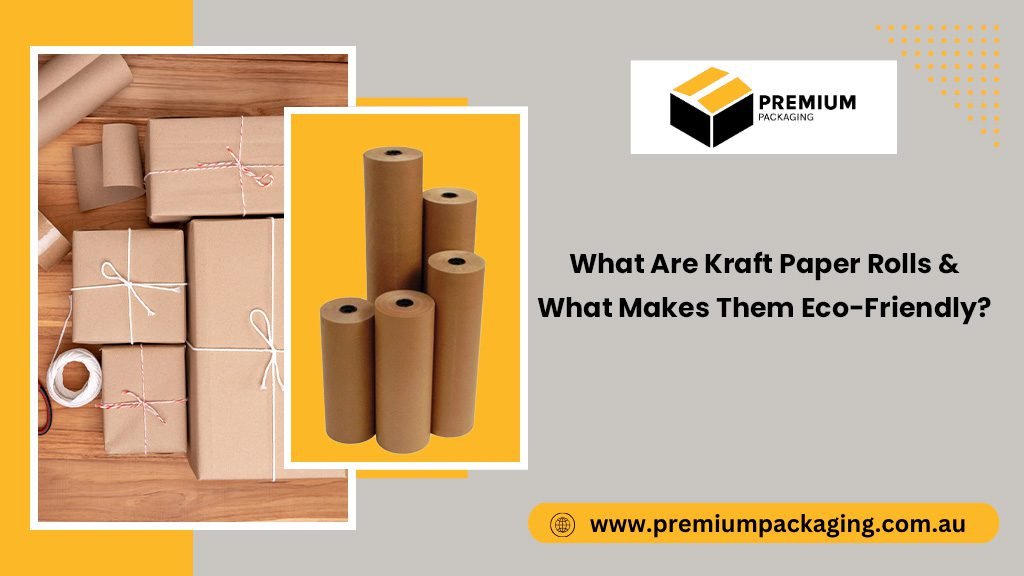
Kraft paper has become a cornerstone of modern sustainable packaging. From retail wrapping to protective void fill, it offers strength, versatility and a natural look that aligns with changing customer expectations. For Australian businesses looking to balance presentation, performance and responsibility, Kraft paper rolls are now a practical default rather than a niche option.
This guide explains what Kraft paper is, how it is used in packaging, and why it plays such an essential role in the shift toward eco-friendly packaging in Australia. It also looks at how Premium Packaging uses kraft paper to support premium branding without unnecessary waste.
What Is Kraft Paper
Kraft paper is a strong paper made from wood pulp using the kraft process, a manufacturing method that preserves more of the wood fibres’ natural strength.
Unlike conventional paper, kraft paper:
- Uses fewer harsh chemicals in processing
- Retains longer, stronger fibres
- Has higher tear resistance and durability
The word “kraft” comes from German and means “strength.” That strength is the defining feature that makes kraft paper suitable for packaging, wrapping and protective applications.
Kraft paper is commonly recognised by its brown, natural appearance, although it is also available in white and dyed variations depending on processing and finishing.
What Is Kraft Paper Used For
Kraft paper is widely used across packaging, retail and logistics due to its balance of strength and flexibility.
Common uses include:
- Wrapping products for retail presentation
- Filling voids inside shipping cartons
- Lining boxes for added protection
- Creating paper bags and sachets
- Producing kraft tissue paper for premium wrapping
In packaging environments, kraft paper is valued for its ability to serve multiple roles. It protects products, enhances the unboxing experience and supports sustainability goals without introducing complex materials.
Types of Kraft Paper
Not all kraft paper is the same. Different grades and formats serve different packaging needs.
Virgin Kraft Paper
Made from fresh wood pulp, virgin kraft paper offers the highest strength and consistency. It is commonly used where durability is critical, such as heavy wrapping or protective layers.
Recycled Kraft Paper
Recycled kraft paper uses post-consumer or post-industrial fibres. While slightly weaker, it performs well for wrapping, void fill, and inner packaging applications.
Kraft Tissue Paper
Kraft tissue paper is a lighter, softer form of kraft paper designed for wrapping products and enhancing presentation.
It is often used for:
- Clothing and accessories
- Gift packaging
- Premium retail orders
Premium Packaging supplies kraft tissue paper that balances softness with tear resistance, making it suitable for both protection and branding.
Bleached Kraft Paper
Bleached kraft paper removes the natural brown colour but retains much of the strength. It offers a cleaner aesthetic while still delivering better performance than standard white paper.
How Is Kraft Paper Used in Packaging
Kraft paper rolls are particularly popular in packaging operations due to their adaptability and efficiency.
Protective Wrapping
Kraft paper can be crumpled, folded or layered to cushion products inside boxes. Its natural stiffness absorbs shock while preventing items from shifting.
Void Fill
As an alternative to plastic void fill, kraft paper fills space effectively and stays in place during transit.
Surface Protection
Kraft paper is often used as an inner liner to protect surfaces from scuffing, scratches or moisture transfer.
Presentation and Branding
Kraft tissue paper elevates presentation while reinforcing a natural, considered brand image. When paired with custom printing, it becomes part of the brand story rather than just protective material.
The Australian Packaging Shift Toward Sustainability
Australian consumers are increasingly aware of packaging waste. Businesses are responding by reducing plastic use, simplifying materials, and choosing recyclable options.
Several factors are driving this shift:
- Growing consumer demand for eco-friendly packaging
- Retailer sustainability requirements
- Increased landfill and recycling scrutiny
- Rising costs of mixed-material packaging
Kraft paper fits neatly into this shift. It is widely recyclable in Australia, accepted by kerbside systems, and easily processed by paper recyclers.
For many businesses, switching to Kraft paper is one of the fastest ways to reduce environmental impact without redesigning entire packaging systems.
What Makes Kraft Paper Eco-Friendly and Why Is That Important
Kraft paper is considered eco-friendly due to a combination of material sourcing, manufacturing and end-of-life outcomes.
Renewable Raw Materials
Kraft paper is derived from wood pulp, a renewable resource when sourced from responsibly managed forests.
Efficient Manufacturing
The Kraft process recovers and reuses chemicals, reducing waste and energy consumption compared to some other paper processes.
High Recyclability
Kraft paper is one of the easiest materials to recycle. Its long fibres make it valuable in recycling streams and suitable for multiple reuse cycles.
Biodegradability
If kraft paper escapes recycling, it breaks down naturally without leaving microplastics or toxic residues.
This matters because packaging choices scale quickly. Small material decisions, repeated thousands of times, have a measurable environmental impact.
What Is the Difference Between Kraft Paper and Butcher Paper
Kraft paper and butcher paper are often confused, but they serve different purposes.
Kraft paper:
- Stronger and more tear-resistant
- Less processed
- Better suited to packaging and shipping
Butcher paper:
- Softer and more flexible
- Often treated for food contact
- Designed for wrapping meats and food products
In packaging applications, kraft paper is the preferred choice due to its strength and durability. Butcher paper is not designed to handle the stresses of shipping or protective packaging.
Why Should I Use Premium Packaging Kraft Tissue Paper
Premium Packaging’s kraft tissue paper is designed specifically for businesses that want protection and presentation without unnecessary materials.
Key benefits include:
- Consistent quality and thickness
- Clean folding and wrapping performance
- Compatibility with custom printing
- Alignment with eco-friendly packaging goals
Rather than treating tissue paper as an afterthought, Premium Packaging positions it as part of the overall brand experience. This approach helps businesses present products professionally while staying true to sustainability commitments.
Can I Print My Logo on Brown Kraft Paper
Yes, brown kraft paper is highly suitable for printing.
Logos and designs printed on kraft paper:
- Appear natural and understated
- Reinforce authenticity and transparency
- Suit premium and minimalist branding styles
Printing considerations include:
- Using high-contrast inks
- Allowing for the natural brown base colour
- Keeping designs clean and simple
Premium Packaging supports custom printing on kraft tissue paper, helping brands achieve a distinctive look without laminates or coatings that reduce recyclability.
Premium Branding With a Natural Touch in Kraft Paper Packaging
Luxury and sustainability are no longer opposites. Kraft paper has become a signal of thoughtful, premium branding.
Brands use kraft paper to:
- Communicate authenticity
- Highlight eco-conscious values
- Create tactile, memorable unboxing experiences
When combined with careful typography, restrained colour palettes and quality finishes, kraft paper supports premium positioning without excess.
This approach resonates particularly well with Australian consumers who value quality but are increasingly sceptical of overpackaging.
Kraft vs Regular Paper
Comparing Kraft paper to regular paper highlights why it dominates packaging applications.
Kraft paper:
- Stronger fibre structure
- Higher tear and puncture resistance
- Better performance under stress
Regular paper:
- Shorter fibres
- More prone to tearing
- Better suited to printing and stationery
For packaging, strength matters more than surface smoothness. Kraft paper offers reliability where regular paper fails.
The Practical Advantages of Kraft Paper Packaging for Businesses
Beyond sustainability, kraft paper delivers operational benefits.
Cost Efficiency
Kraft paper is lightweight, reducing shipping costs while providing strong protection.
Storage and Handling
Paper rolls are easy to store, dispense and adapt to different product sizes.
Brand Alignment
Using kraft paper helps businesses meet sustainability targets and clearly communicate their values to customers.
Versatility
One material can be used across multiple packaging stages, reducing complexity and reliance on suppliers.
For many businesses, these advantages make kraft paper a wise commercial decision, not just an environmental one.
Wrap It Up With Premium Packaging Kraft Paper
Kraft paper rolls and kraft tissue paper are more than packaging materials. They are tools for protecting products, building brand trust and reducing environmental impact.
Premium Packaging works with Australian businesses to supply kraft paper solutions that meet real-world packaging demands while supporting sustainable practices.
By choosing quality kraft paper and using it thoughtfully, businesses can deliver packaging that performs well, looks considered and aligns with modern expectations.
FAQs
What are kraft paper rolls used for?
Kraft paper rolls are used for wrapping, void fill, surface protection and inner packaging in shipping and retail environments.
Is Kraft paper recyclable in Australia?
Yes, kraft paper is widely accepted in Australian kerbside recycling systems and is easy to process.
What is Kraft tissue paper?
Kraft tissue paper is a lighter, softer version of kraft paper used for wrapping products and enhancing presentation.
Can Kraft paper be printed on?
Yes, kraft paper can be printed with logos and designs, especially for branding and retail packaging.
Is Kraft paper better than regular paper for packaging?
Yes, kraft paper is stronger and more durable, making it better suited for packaging and shipping.