Australia’s packaging landscape is changing quickly as businesses balance cost, convenience and environmental responsibility. With rising interest in sustainable packaging across Australia, one of the biggest decisions companies face is whether reusable or disposable packaging is the better fit. Each option has clear advantages and challenges, and the best choice depends on industry needs, transport cycles, hygiene requirements and environmental goals.
Below, we unpack the key differences, environmental impacts and practical considerations that guide Australian businesses in choosing the best packaging option for their operations.
What Is Reusable Packaging?
Reusable packaging refers to containers, crates, pallets, wraps or materials designed to be used multiple times rather than discarded after a single trip. It is typically made from durable materials such as reinforced plastics, stainless steel, timber or heavy-duty textiles. The goal is to reduce waste and long-term material costs while improving supply-chain efficiency. Reusable packaging is widely adopted in industries with closed-loop systems where items can be easily returned, sanitised and redistributed.
What Is Disposable Packaging?
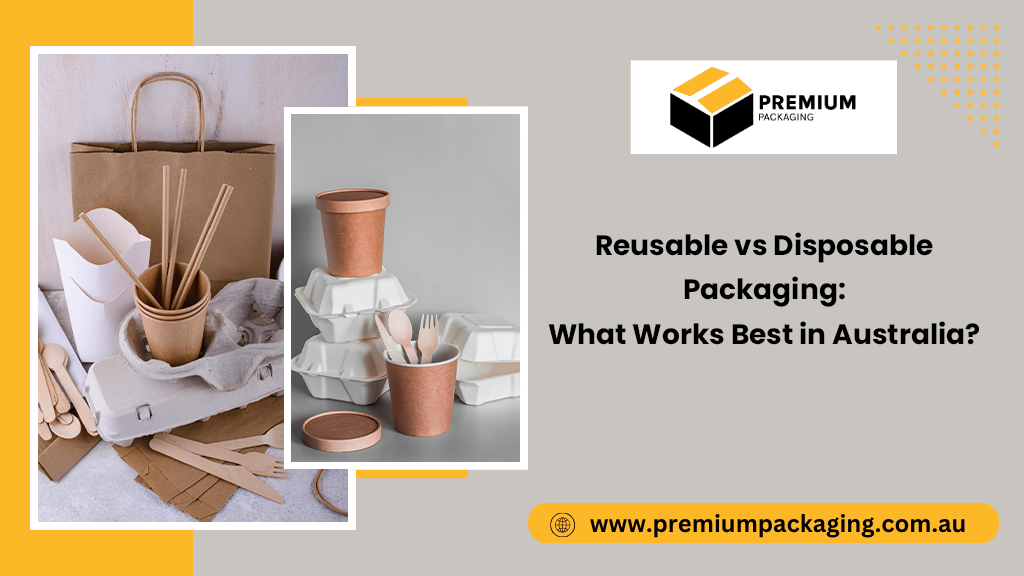
Disposable packaging is designed for single use before being recycled, composted or placed in waste streams. It includes cardboard boxes, plastic wrapping, takeaway containers, films, paper packaging and protective cushioning. Disposable packaging offers convenience, hygiene and broad compatibility across transport networks. Its simplicity makes it ideal for open logistics systems where receiving items back is impractical. While disposal creates more waste, modern disposable packaging options are increasingly recyclable or biodegradable.
Reusable Packaging vs Disposable Packaging: Key Differences
Competitor pages cover environmental comparisons, but here we build a more detailed, Australia-specific breakdown.
1. Durability and Lifespan
- Reusable packagingis built for repeated cycles and can withstand rough handling.
- Disposable packagingis lighter and intended for one-time protection.
2. Cost Structure
Reusable items require higher upfront investment but reduce long-term purchasing frequency. Disposable packaging has a lower initial cost but accumulates expense over time.
3. Supply Chain Fit
Reusable packaging suits predictable return cycles, internal logistics and local distribution. Disposable packaging suits long-distance, multi-stop supply chains.
4. Waste Impact
Reusable packaging supports waste reduction goals, while disposable packaging contributes more to landfill unless recycled or composted correctly.
5. Hygiene Requirements
Disposable packaging remains essential in industries like food service and healthcare where single-use reduces contamination risk.
Reusable Packaging vs Disposable Packaging – Which Is Better for the Environment?
Reusable packaging is generally more environmentally friendly because it significantly reduces waste over multiple cycles and lowers the need for constant raw-material production. However, disposable packaging can be sustainable when made from recyclable or compostable materials and used in open supply chains where returns are impractical. The better option depends on the system: closed-loop operations favour reusables, while dispersed delivery networks may benefit from low-impact disposable alternatives.
Why Australia Is Re-Evaluating Its Packaging Choices
Australian businesses are under growing pressure from customers, legislation and supply-chain demands to reduce environmental impact. The move towards sustainable packaging in Australia is now driven by:
- National Packaging Targets
- Government focus on reducing landfill
- Consumer demand for eco-friendly packaging solutions
- Rising waste-management costs
- Greater access to recyclable and biodegradable options
Reusable packaging Australia-wide is gaining traction in sectors like retail logistics, agriculture, manufacturing and warehousing, while disposable packaging Australia-wide remains crucial for food, healthcare, e-commerce and fast-moving goods.
Advantages of Reusable Packaging
1. Reduced Long-Term Costs
While the upfront price is higher, reusable packaging lowers ongoing purchasing and waste-management expenses.
2. Lower Environmental Impact
By cutting down on single-use waste, reusables significantly reduce landfill contribution.
3. Improved Strength and Protection
Durable materials improve load stability and reduce damage during transport.
4. Consistency Across Cycles
Reusable items maintain performance quality across multiple uses, making them ideal for predictable logistics.
5. Better Brand Perception
Companies using eco-friendly packaging solutions often earn stronger customer trust and sustainability credibility.
Limitations of Reusable Packaging
- Requires storage space for return cycles
- Not practical for long-distance shipping
- Needs cleaning or sanitising between uses
- Higher upfront investment
- Requires reliable return logistics
Reusable options are highly effective—but not for every industry.
Advantages of Disposable Packaging
1. Convenience and Flexibility
Ideal for fast-moving supply chains with unpredictable routing.
2. Lower Upfront Cost
Disposable packaging is cheaper to purchase and easy to scale.
3. Hygiene and Contamination Control
Essential for food handling, medical applications and sanitary-sensitive products.
4. Lighter and More Space Efficient
Reduces freight weight and can be compacted when not in use.
5. Modern Eco-Friendly Options
Australia now has access to recyclable, compostable and biodegradable disposables, lowering environmental impact.
Limitations of Disposable Packaging
- Generates more waste
- Higher long-term purchasing cost
- Less durable and protective
- Vulnerable to supply-chain volatility
- Requires consistent recycling or waste management
Disposable options remain essential for many industries, but careful material selection is key.
Which Packaging Option Works Best in Australia?
The choice depends on logistics, product type, environmental goals and operational efficiency.
Reusable Packaging Works Best For:
- Closed-loop supply chains
- Warehousing to retail movements
- Internal factory transfers
- Bulk transport of goods
- Businesses committed to waste reduction
Disposable Packaging Works Best For:
- Food and takeaway packaging
- Healthcare and pharmaceutical use
- Long-distance freight
- E-commerce parcels
- Situations with no viable return system
Hybrid Packaging Solutions: A Growing Trend in Australia
An increasing number of Australian businesses now use hybrid systems, combining reusable internal transit packaging with disposable packaging for the final delivery stage.
This approach:
- Reduces overall waste
- Improves cost control
- Minimises product damage
- Optimises environmental outcomes
- Maintains the flexibility required for modern supply chains
This balance allows organisations to adopt eco-friendly packaging solutions without disrupting their operations.
Conclusion
Reusable and disposable packaging both play essential roles in Australia’s supply chain. Reusable options reduce waste and long-term costs in controlled logistics environments, while disposable options offer hygiene, flexibility and practicality in widespread distribution networks. The best packaging option in Australia depends on your industry demands, sustainability goals and transport conditions. Premium Packaging supports businesses with both reusable and disposable packaging solutions designed to meet efficiency, safety and environmental standards.
FAQ
1 Is reusable packaging always more sustainable than disposable packaging?
Reusable packaging often has a lower environmental impact because it reduces waste and the need for continuous raw-material production. However, its sustainability depends on the number of reuse cycles and the efficiency of the return system. Disposable packaging can also be sustainable when recyclable or compostable materials are used. The best option depends on logistics, industry requirements and overall lifecycle impact.
2 Which industries benefit most from reusable packaging?
Industries with predictable, closed-loop systems benefit the most—such as manufacturing, agriculture, retail distribution and warehouse-to-store logistics. These sectors can easily return packaging, clean it and reuse it. Businesses with long-distance or multi-stop supply chains may find reusable packaging less practical unless supported by well-managed return networks.
3 Can disposable packaging be environmentally responsible?
Yes. Many disposable packaging options in Australia are now recyclable, compostable or biodegradable. When chosen carefully and disposed of correctly, single-use packaging can support sustainability goals—especially for industries where hygiene, food safety or contamination control are essential. The key lies in selecting materials aligned with end-of-life recycling or composting systems.
4 Is reusable packaging more expensive than disposable packaging?
Reusable packaging has a higher upfront cost but becomes cost-effective over repeated cycles. Businesses often save money on long-term materials, waste disposal and replacement frequency. Disposable packaging costs less initially but requires continuous purchasing. The better financial option depends on volume, handling environment and whether a return system is in place.
5 How do I choose between reusable and disposable packaging for my business?
Evaluate your supply chain, transport routes, hygiene needs and sustainability commitments. Reusable packaging suits controlled logistics with reliable return paths, while disposable packaging suits long-haul, food service and e-commerce. Many Australian businesses adopt a hybrid approach—using reusables internally and disposables for final-mile delivery—to balance cost, convenience and environmental impact.