
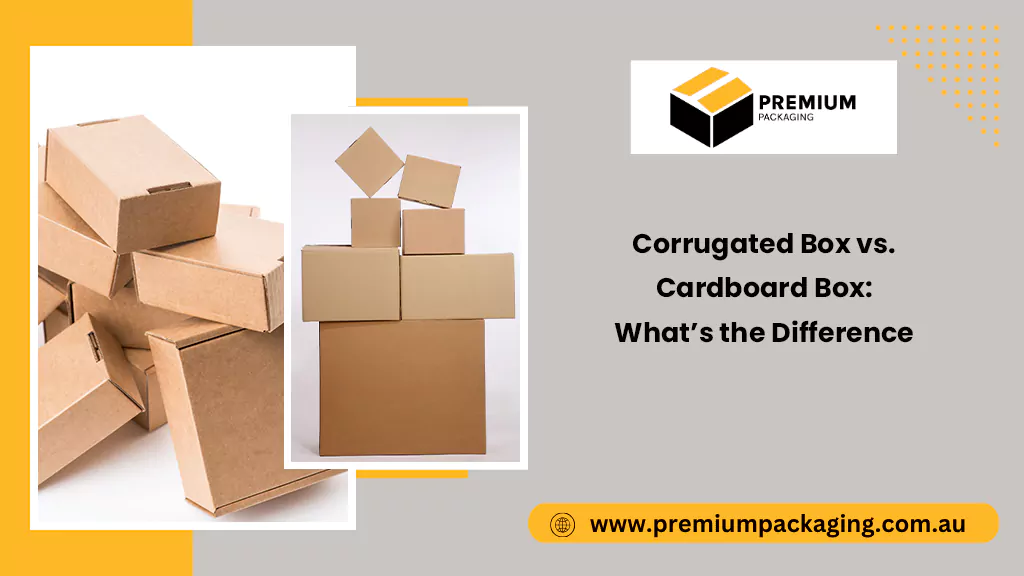
All corrugated boxes are made from cardboard, but not all cardboard boxes are corrugated. The difference lies in structure, strength, and intended use. Understanding this distinction helps businesses choose packaging that properly protects products, controls costs, and meets customer expectations.
This guide is written for Australian businesses sourcing packaging for shipping, storage, or retail.
Understanding the Basics: Cardboard vs. Corrugated
The terms cardboard and corrugated are often used interchangeably, but they describe different forms of paper-based packaging materials.
Cardboard is a broad term for thick paper-based materials. Corrugated cardboard is a specific type of cardboard engineered for strength and durability. Most shipping cartons used in eCommerce and logistics are corrugated, even if people casually call them cardboard boxes.
This confusion often leads businesses to select the wrong box for their needs, resulting in damaged goods or unnecessary packaging costs.
What Is a Cardboard Box?
A cardboard box is typically made from a single layer of thick paperboard. It has a smooth, flat structure without internal fluting.
Cardboard boxes are commonly produced using:
- Paperboard
- Folding carton stock
- Solid fibreboard
These boxes are lightweight and easy to print on, which makes them popular for retail packaging.
Typical uses of cardboard boxes
- Cereal and food packaging
- Cosmetic boxes
- Shoe boxes
- Lightweight retail products
- Inner product packaging
Cardboard boxes work well when products are:
- Light in weight
- Not exposed to rough handling
- Displayed rather than shipped long distances
Because cardboard lacks internal reinforcement, it is not designed to absorb impact or support heavy loads.
What Is a Corrugated Box?
A corrugated box is made from corrugated cardboard, which consists of three layers:
- An outer liner
- An inner liner
- A fluted medium sandwiched between them
The fluted layer is the defining feature that gives corrugated boxes their strength.
So when people ask what a corrugated box is or what it means, the answer is a box made with a layered structure that improves rigidity, cushioning, and stacking strength.
Typical uses of corrugated boxes
- Shipping cartons
- Moving boxes
- Storage boxes
- Subscription boxes
- Industrial packaging
Corrugated boxes are designed to withstand:
- Compression
- Impact
- Vibration during transport
This makes them the preferred option for shipping and logistics.
Corrugated Boxes Meaning Explained Simply
Corrugated boxes get their name from the wavy fluted sheet inside the box walls. This fluting acts like a built-in shock absorber.
The practical meaning of corrugated boxes is durability through structure. The flutes create air pockets that:
- Cushion products
- Increase stacking strength
- Reduce damage during transit
Different flute sizes can be used depending on the required strength or cushioning.
Key Differences Between Corrugated and Cardboard Boxes
Understanding the difference between a corrugated box and a cardboard box comes down to structure, performance, and application.
Structure
- Cardboard boxes use a single-layer paperboard
- Corrugated boxes use a multi-layer design with fluting
Strength
- Cardboard is suitable for light loads
- Corrugated cardboard handles heavier items and stacking pressure
Protection
- Cardboard offers minimal impact resistance
- Corrugated boxes absorb shock and vibration
Weight
- Cardboard boxes are lighter
- Corrugated boxes are slightly heavier but far stronger
Cost
- Cardboard boxes are cheaper for small, lightweight items
- Corrugated boxes cost more but reduce damage and returns
These differences matter most when packaging products for shipping rather than display.
Benefits of Corrugated vs. Cardboard Boxes
While both box types have a place, corrugated packaging offers clear advantages for most commercial shipping applications.
Benefits of corrugated boxes
- Superior protection during transport
- Better stacking and load-bearing capacity
- Reduced product damage and returns
- Suitable for long-distance shipping
- Available in single-wall, double-wall, and triple-wall options
Benefits of cardboard boxes
- Lower material cost
- Excellent print quality
- Lightweight and easy to assemble
- Ideal for retail shelves and inner packaging
Choosing the wrong option often costs more in the long run through damaged stock or customer dissatisfaction.
Corrugated Box vs. Cardboard Box in eCommerce
For eCommerce businesses, corrugated boxes are almost always the better choice.
Shipping exposes parcels to:
- Multiple handling points
- Conveyor belts
- Vehicle vibration
- Stacking in depots
Cardboard boxes are not designed for these conditions. Corrugated boxes are.
That is why most packaging suppliers recommend corrugated cartons for online orders, even for lightweight products.
When to Choose Which Box?
Choosing between cardboard and corrugated depends on how the box will be used.
Choose a cardboard box when:
- The product is lightweight
- Packaging is primarily for display
- The box will not be shipped on its own
- The box is placed inside another outer carton
Choose a corrugated box when:
- The box will be shipped directly
- Products are heavy or fragile
- Stacking strength is required
- Storage or long-distance transport is involved
Many businesses use both types together, with cardboard for inner packaging and corrugated for outer shipping cartons.
Why Is Corrugated Cardboard Popular?
Corrugated cardboard is popular because it balances strength, cost, and sustainability.
Key reasons for its widespread use include:
- Excellent strength-to-weight ratio
- Customisable sizes and flute types
- Recyclability and use of recycled materials
- Compatibility with automation and logistics systems
Corrugated boxes also adapt well to branding, with options for printing, die-cutting, and custom inserts.
Types of Corrugated Boxes Explained
Corrugated boxes are available in several formats, each suited to different needs.
Single-wall corrugated boxes
- One fluted layer between two liners
- Suitable for most eCommerce shipments
Double-wall corrugated boxes
- Two fluted layers
- Higher strength and durability
- Used for heavier or fragile items
Triple-wall corrugated boxes
- Maximum strength
- Used for industrial or export packaging
Understanding these options helps businesses avoid under- or over-packaging.
Sustainability and Environmental Considerations
Both cardboard and corrugated packaging are widely recyclable in Australia.
Corrugated boxes often contain:
- A high percentage of recycled fibre
- Renewable paper-based materials
Many businesses choose corrugated cardboard as part of their sustainability strategy because it offers protection without relying on plastics.
Premium Packaging supplies corrugated and cardboard solutions that support recycling and responsible material sourcing.
Industry Trends and Innovations
Packaging is evolving, driven by e-commerce growth, sustainability demands, and automation.
Lightweighting
Manufacturers are developing lighter corrugated boards that maintain strength while reducing material use.
Smart packaging design
Custom box sizing reduces void fill and shipping costs.
Improved recyclability
Water-based inks and minimal coatings improve recyclability.
Hybrid packaging solutions
Combining cardboard aesthetics with corrugated strength for premium shipping experiences.
These innovations help businesses improve efficiency without sacrificing protection.
Printing and Branding Considerations
Both cardboard and corrugated boxes can be printed, but the results differ.
Cardboard:
- Smooth surface
- High-quality retail print finish
- Ideal for shelf presentation
Corrugated:
- Slight texture from fluting
- Strong branding impact
- Well-suited for logos, messaging, and unboxing experiences
For many brands, the box itself becomes a marketing asset.
Common Misconceptions About Cardboard and Corrugated Boxes
“They are the same thing”
Corrugated is a type of cardboard, but not all cardboard is corrugated.
“Cardboard boxes are cheaper overall”
They may cost less upfront, but often cost more through damage and returns.
“Corrugated boxes are only for heavy items”
They are suitable for lightweight items that need protection during shipping.
Choosing the Right Packaging Partner
Selecting the right packaging supplier matters as much as choosing the correct box.
Look for suppliers who offer:
- Clear explanations of material options
- Custom sizing and strength recommendations
- Consistent quality and stock availability
- Local Australian support
Premium Packaging works with businesses to match packaging solutions to real-world use, not assumptions.
Practical Buying Tips
Before choosing between cardboard and corrugated boxes, consider:
- How far the product will travel
- How many times will it be handled
- Whether it will be stacked
- Customer expectations on presentation
- Environmental goals
Testing packaging under realistic conditions is often the best way to confirm suitability.
Final Thoughts on Cardboard vs Corrugated
The difference between cardboard vs corrugated is not about preference, but performance. Each material serves a purpose, and using the right one protects products, improves customer experience, and reduces long-term costs.
For most shipping and storage needs, corrugated boxes offer reliability that plain cardboard boxes cannot match.
FAQs
What is the difference between a corrugated box and a cardboard box?
A corrugated box has a fluted inner layer that provides strength and cushioning, while a cardboard box is typically single-layer and less durable.
What does corrugated box mean?
It refers to a box made from corrugated cardboard, with a wavy, fluted layer between two flat liners.
Are corrugated boxes stronger than cardboard boxes?
Yes, corrugated boxes are significantly stronger and better suited to shipping and stacking.
When should I use a cardboard box instead of a corrugated box?
Cardboard boxes are best for lightweight products and retail display packaging.
Why are corrugated boxes used for shipping?
They provide better protection, stacking strength, and durability during transport.